

Quick answer: Are Dutch rabbits good pets?
Often, yes. Dutch rabbits are small, usually 3½ to 5½ pounds, and veterinarian-reviewed breed guides describe them as intelligent, friendly, and patient, and as good pets for first-time rabbit owners. They can be wary at first, so they do best when allowed to approach on their own terms. Their short coat is simple to groom. With calm, gentle handling, a Dutch can be a wonderful first rabbit.
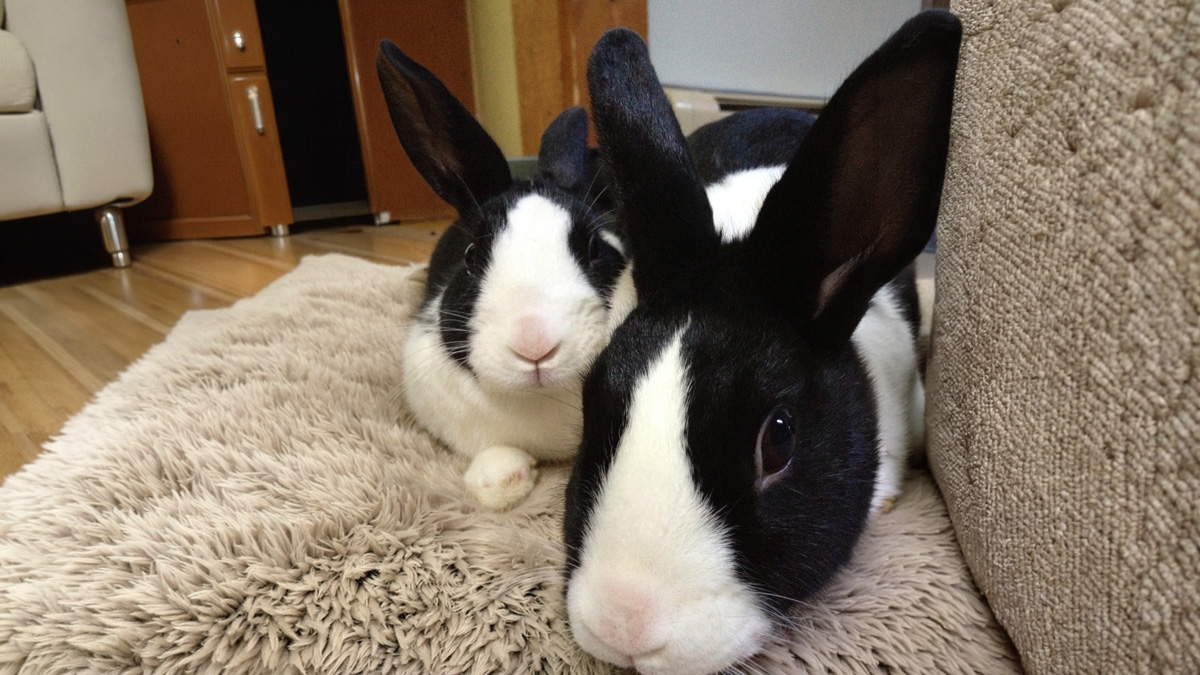
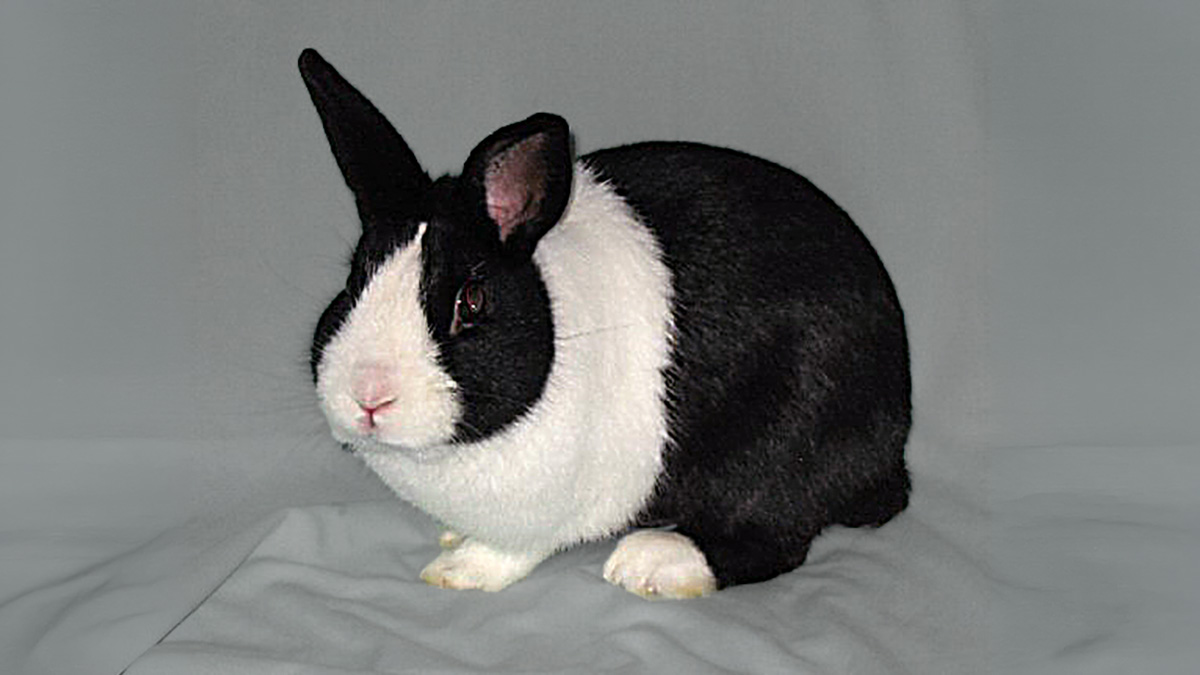
Ask someone to draw a pet rabbit, and there’s a good chance they’ll sketch a Dutch: a white blaze up the face, a white band around the shoulders, and color everywhere else. The pattern is so famous that the breed is named for it, not for the place it came from.
At a Glance
| Size group | Small |
|---|---|
| Adult weight | About 3½ to 5½ pounds |
| Coat | Short and easy to keep |
| The look | White blaze on the face and chest, white “saddle” around the shoulders |
| Often described as | Intelligent, friendly, patient; can be wary at first |
| Often suits | First-time owners; homes with children who handle rabbits calmly, with supervision |
Those Famous Markings
The American Rabbit Breeders Association calls the Dutch “perhaps the most recognizable breed.” Veterinarian-reviewed breed guides describe the hallmark pattern as a white blaze on the face and chest and white saddle markings around the shoulders. Breeders call it “Dutch markings,” and that’s where the name comes from.
Despite the name, the breed took shape in England. Breed guides trace it to a Belgian rabbit called the Petit Brabançon, brought to England in the 1830s, where breeders developed the Dutch we know today. That’s why Dutch rabbits are sometimes called Hollanders or Brabanders.
What Dutch Rabbits Are Like
Dutch rabbits are described as smart, friendly, and patient, and the breed guides say most are easily trained. Some learn to come when called, play fetch, do tricks, or even run agility courses.
A Dutch may be skittish or wary at first. The breed guides suggest letting a new Dutch approach on its own terms before trying to handle or pick it up. Once it knows and trusts you, a Dutch is generally friendly and affectionate. Breed offers clues about temperament, but every rabbit is an individual.
Small Rabbit, Gentle Hands
At 3½ to 5½ pounds, a Dutch sits with the small breeds. The Merck Veterinary Manual notes that smaller rabbits are more delicate and need especially careful handling. When lifting is necessary, Merck’s advice is to always support the hind end and back legs. That’s also why the breed guides describe the Dutch as a good fit for homes with children who understand calm, gentle handling and are supervised.
Easy Coat Care
With its short coat, a Dutch needs less grooming than many breeds. The Merck Veterinary Manual recommends brushing short-haired rabbits at least twice a week, and that’s a quick job with a Dutch.
Who a Dutch Suits
- A good match: first-time owners, people who’d enjoy a clever, trainable rabbit, and families whose children will handle gently with an adult nearby.
- Think it over: if the home is busy and loud, or if young children would want a rabbit to carry around. A small, wary rabbit needs patience and floor-level time to feel safe.
Still weighing breeds? How to choose a pet rabbit compares the Dutch with the Rex, the New Zealand, and others. Once a Dutch comes home, how to bond with your rabbit helps with those wary first weeks.
FAQ
Why are they called Dutch rabbits?
For their color pattern, not their homeland. The white blaze and saddle are known as “Dutch markings.” The breed itself was developed in England from a Belgian rabbit.
How big do Dutch rabbits get?
Adults usually weigh about 3½ to 5½ pounds, and 5½ pounds is the breed’s maximum show weight. That makes the Dutch a small breed.
Are Dutch rabbits good for first-time owners?
Veterinarian-reviewed breed guides call them good pets for first-time rabbit owners. Expect some shyness at first, and give a new Dutch time to come to you.
Sources
Breed facts on this page come from the veterinary, veterinarian-reviewed, and breed-association sources listed below, checked October 2026. Breed descriptions are summarized in RabbitHutch.org’s own words and traced here.
- PetMD—“Dutch Rabbit.” By Catherine Gose, CVT; reviewed by Laurie Hess, DVM, DABVP; updated October 20, 2023. Verbatim: “Interestingly, the Dutch rabbit is not named for the breed’s origin, but rather for the rabbits’ unique color pattern known as ‘Dutch markings.’ Dutch rabbits are easily recognized by a characteristic white blaze on the face and chest, as well as white saddle markings around the shoulders. Adult Dutch bunnies reach a weight of 3.5–5.5 pounds.” “Dutch rabbits may also be referred to as Hollander or Brabander rabbits.” “Dutch rabbits are descendants of the Petit Brabancon, which was a rabbit bred in Belgium since the fifteenth century. In the 1830s, this Belgian rabbit was imported to England, where the breed was developed into the Dutch rabbit we know today.” “Dutch rabbits are a smaller breed that can be skittish or wary at first, so it’s always best to let them approach you on their terms before attempting to handle them or pick them up. Once they get to know and trust you, Dutch rabbits are generally friendly and affectionate.” “With their short hair coat, Dutch rabbits have minimal grooming requirements in comparison with some other breeds. They are typically smart, friendly, and patient. Most Dutch rabbits are easily trained and can learn to play fetch, do tricks, come when called, and even run agility courses!” “…good pets for first-time rabbit parents and in households with children that understand calm, gentle handling and are supervised.” Backs the name, markings, weight, history, temperament, trainability, coat, and household fit. Used for breed description only, not health claims. Checked October 3, 2026. Source link.
- American Rabbit Breeders Association—“Recognized Breeds.” Breed standards organization. Verbatim: “Perhaps the most recognizable breed, the Dutch rabbit was developed in England during the 1830s. Breeders began selecting rabbits that bore the distinct markings that have become the hallmark of the breed we know today.” “Maximum weight 5.5 lbs.” Backs the most-recognizable quote, the England origin, and the maximum weight. Checked October 3, 2026. Source link.
- Merck Veterinary Manual—“Selecting a Rabbit.” Laurie Hess, DVM, DABVP; full review July 2026. Verbatim: “Larger rabbits are often calmer and sturdier. Smaller rabbits are more delicate and need especially careful handling.” “Short-haired rabbits need brushing at least twice a week, while long-haired rabbits need more frequent grooming.” Backs the careful-handling note for small rabbits and the brushing frequency. Checked September 30, 2026. Source link.
- Merck Veterinary Manual—“Description and Physical Characteristics of Rabbits.” Laurie Hess, DVM, DABVP; full review July 2026. Verbatim: size classes place Dutch, Holland Lop, and Mini Rex among small breeds (2–6 pounds), Rex among medium breeds, New Zealand among large breeds, and Flemish Giant among giant breeds. Backs the size group in the At a glance table. Checked September 30, 2026. Source link.
- Merck Veterinary Manual—“Providing a Home for a Rabbit.” Laurie Hess, DVM, DABVP; full review July 2026. Verbatim: “When lifting a rabbit, always support the hind end and back legs… Never pick up a rabbit by the ears.” Backs the lifting guidance. Checked September 30, 2026. Source link.
- Judgment calls. The “Often suits” line, the “who a Dutch suits” notes, and the comparisons with other breeds are RabbitHutch.org’s own reasoning, built on the sourced facts above rather than quoted from any one source.
Found this helpful? The kindest thing you can do is leave a tip or share it with another rabbit person—every guide here stays free, always.
Get rabbit care tips
Join the Hutch list—I write when there’s something worth hopping over for, not every other Tuesday.