

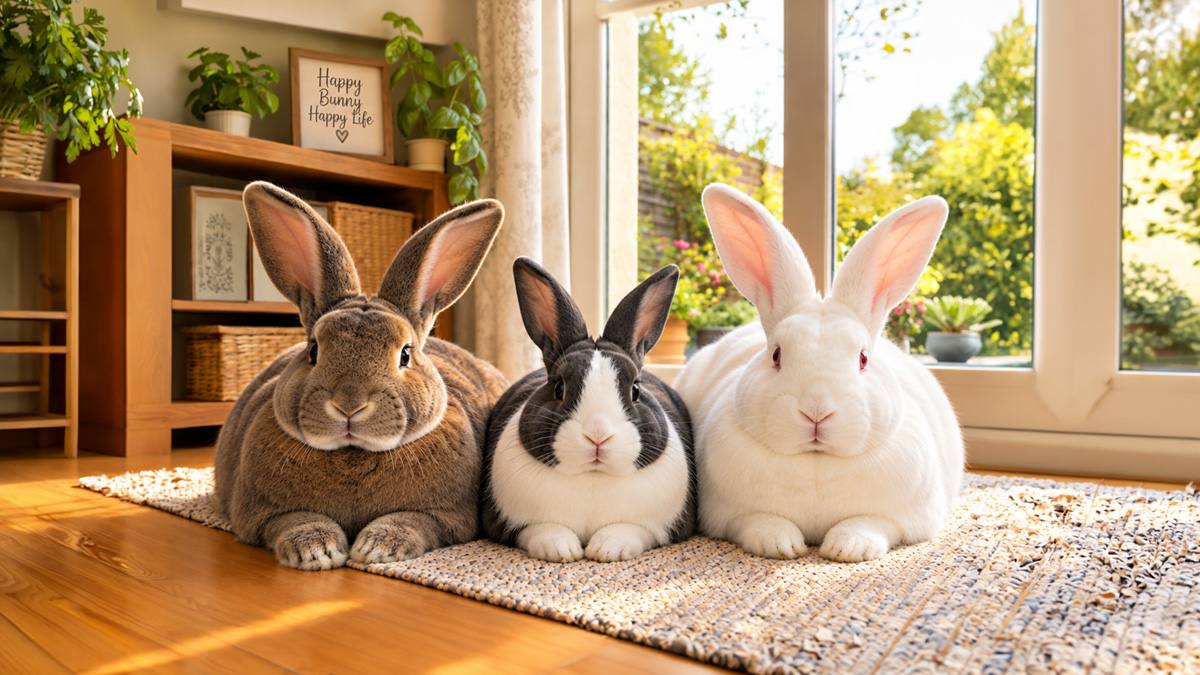
Quick answer: What’s the best pet rabbit for a first-time owner?
For many beginners, a medium or large rabbit with a short coat is the friendliest place to start. Rex, Dutch, and New Zealand rabbits are all described in veterinarian-reviewed breed guides as friendly, easygoing rabbits that suit new owners and families. Tiny dwarf breeds are more delicate and often more skittish, and long-wooled breeds like the Angora need a lot of grooming. Breed narrows the search; the individual rabbit decides it. An adult whose caregiver already knows its habits is often the most comfortable first rabbit of all.
Scroll through rabbits looking for homes, and the photos start to blur: velvet ears, round dark eyes, a pink nose mid-twitch. The tiniest one looks like it would fit in a teacup. Surely the smallest rabbit is the easiest? Not quite. Learning how to choose a pet rabbit starts with a few surprises that make the whole choice easier.
Start With the Home You Really Have
Every good match starts on the human side. Before falling for a face, run through a few honest questions:
- Is this a long-term yes? Purdue’s veterinary school says rabbits live 5 to 10 years on average, and some reach 15. A rabbit chosen today may still be hopping around a decade from now.
- Who does the daily care? A child can love a rabbit with a whole heart, but an adult is the one who makes sure care happens every day.
- How much room is there? Every rabbit needs a safe indoor home base plus daily space to run, and bigger rabbits need a lot more of both.
- Can everyone live with hay? Rabbits need it at all times, so a hay allergy in the house matters.
- Is there time? Fresh hay and water, litter cleaning, exercise, brushing, and quiet company are part of every single day.
- Is a rabbit vet within reach? Look for a rabbit-experienced vet and an after-hours option. The Association of Exotic Mammal Veterinarians’ Find a Vet directory is a good place to start.
- Does the budget stretch? Housing, hay, litter, routine care, and the occasional surprise vet bill all belong in the plan.
A few “not yet” answers aren’t a failure. They’re a to-do list. And a to-do list is much easier to work through now, while there’s still time to plan, than after a rabbit has already come home.
The Surprise: Bigger Is Often Easier
Here’s the idea that changes how many people shop for a first rabbit. The Merck Veterinary Manual notes that larger rabbits are often calmer and sturdier, while smaller rabbits are more delicate and need especially careful handling.
That turns the teacup instinct upside down. A tiny rabbit can look like the simple choice, but a small, quick body that startles easily asks more of a new owner, not less. A bigger rabbit tends to be more solid in the hands and more relaxed about the busy world of people.
Coat matters just as much. The Merck Veterinary Manual recommends brushing short-haired rabbits at least twice a week. Long-haired rabbits need much more, and for the woolly breeds, grooming becomes a real part of daily life.
Put those two ideas together and a pattern appears: a medium or large rabbit with a short coat is often the gentlest place to begin. From there, the breeds below show how the pattern plays out.
Three Breeds Worth a Look for a First Rabbit
These three come up again and again in veterinarian-reviewed breed guides as good fits for new rabbit people. No breed guarantees a personality, but these give a search a very good head start.
Rex. Run a hand along a Rex and the fur feels like crushed velvet, short and plush, standing straight up instead of lying flat. Rex rabbits are described as patient, good-natured, and docile, with a low-to-moderate energy level, and the breed guides call them wonderful pets for beginners as well as experienced owners. That velvet coat needs only a quick, regular brushing. Standard Rex rabbits weigh roughly 7½ to 10½ pounds. The Mini Rex wears the same plush coat in a body closer to 4 pounds, so it sits with the small breeds and deserves the gentler handling small rabbits need.
Dutch. The Dutch is the rabbit many people picture first: a crisp white blaze down the face and a neat white “saddle” around the middle, as if the rabbit were wearing a little jacket. At about 3½ to 5½ pounds, Dutch rabbits are on the small side, but they’re described as intelligent, friendly, and easygoing once settled, and the breed guides call them good pets for first-time rabbit owners. Their short coat is easy to keep. With children in the home, gentle, supervised handling is part of the deal, as it is with any rabbit.
New Zealand. A New Zealand is a big, sturdy armful, usually 9 to 12 pounds. The breed guides describe New Zealands as friendly, social, and laid-back, and generally easier to handle than smaller, more skittish breeds. They’re also described as a good choice for families with children. The trade-off is size: a New Zealand needs noticeably more room, more hay, and a bigger litter box than a small rabbit.
Wonderful Rabbits That Ask a Little More
The next four breeds are lovely companions. They just come with a special requirement: room, grooming, extra care, or a gentler, calmer household.
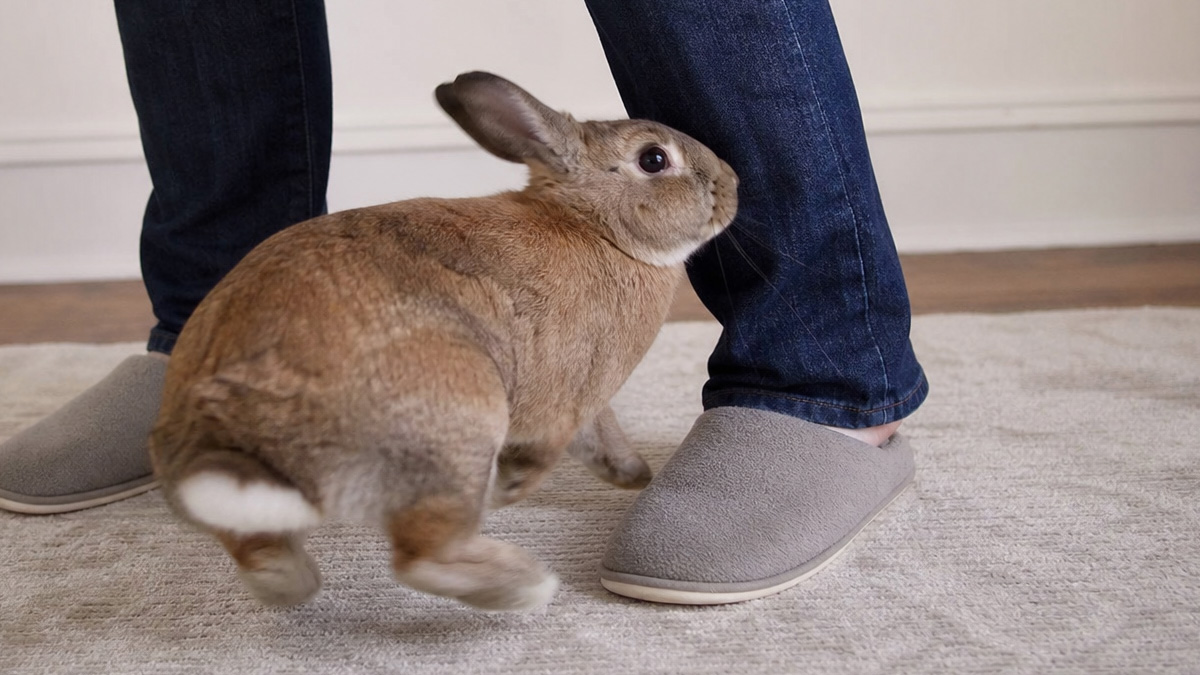
Netherland Dwarf. At around 2 to 2½ pounds, this is one of the smallest rabbits there is, with a round face and short ears that make it look forever young. It’s easy to see why so many people fall for one. But the breed guides describe Netherland Dwarfs as often shy and skittish at first, and a frightened dwarf may kick, scratch, or leap from someone’s arms and get hurt. They’re described as a great fit for adults and seniors, and not typically for homes with young children. And because small rabbits love to zip around ankles, especially at playtime, a dwarf-sized rabbit asks for a little extra care about where feet land. A Netherland Dwarf can be a wonderful rabbit. It just isn’t the forgiving starter rabbit its size suggests.
Holland Lop. Those floppy ears and that round, sweet face put the Holland Lop at the top of many “best beginner bunny” lists, and it’s easy to see why. Holland Lops are described as friendly, playful, and energetic. The same veterinarian-reviewed breed guide adds some fine print, though. They can be shy and jumpy at first, and their back legs are surprisingly strong. A frightened lop that kicks hard to get away, whether from someone’s arms or a grip that feels unsafe, can strain muscles or even injure its own spine. At under 4 pounds, a Holland Lop needs calm, well-supported handling, with its hindquarters held close. Their folded ears also trap moisture and debris, and the guide recommends weekly ear cleaning to help prevent recurring ear infections. The guide suggests a quiet, calm home with adults or older children, around 9 and up. A Holland Lop can be a lovely first rabbit for the right household. It just isn’t the effortless choice those lists suggest.
Angora. Few rabbits are as striking as an Angora in full coat, a soft cloud with a nose somewhere inside it. Angoras are described as intelligent, friendly, and social. But their wool grows about an inch a month, tangles easily, and needs brushing several times a week, with clipping every few months. The breed guides say it plainly: for someone who has never cared for a rabbit before, an Angora may not be the best place to start. After a first rabbit or two, one can be a joy.
Flemish Giant. Here’s the rabbit that proves bigger can be easier. Flemish Giants are known as “gentle giants,” easygoing, docile, and patient, and their short coat isn’t hard to care for. The catch is everything else. Adults usually weigh 15 to 20 pounds or more and can stretch out to several feet long. That means a very large living space, big supplies, and a rabbit that takes real strength to carry to the vet. For a home with plenty of room and time, a Flemish Giant can be a wonderful first rabbit. For a home without much room to spare, it’s a hard fit.
Then Choose the Individual
Breed is a helpful map, but a rabbit is not a breed description. Once the search has narrowed, the individual rabbit matters most.
This is where an adult rabbit often shines. With an adult, what you see is close to what you’ll get: full-grown size, the real coat, and habits that have had time to show themselves. A foster caregiver who has lived with a rabbit for weeks can say whether it uses a litter box, likes company, or tolerates being lifted. A baby rabbit is a charming mystery by comparison, and it will keep growing and changing. For most first-time owners, a settled adult is the more comfortable choice.
When it’s time to meet a rabbit, plan a calm visit. Rabbits are most active around dawn and dusk, so an early morning or evening visit may show more of the rabbit’s usual self. Sit on the floor, let the rabbit come to investigate, and let it leave if it wants to. One visit isn’t a personality test, and picking a rabbit up just to see if it “likes cuddles” won’t reveal much. Not all rabbits like to be held, and many still make wonderful companions. For what closeness can look like later, see where rabbits like to be petted.
Then ask the questions a photo can’t answer:
- What does the rabbit eat now, and how has it been handled?
- How old is it, and how big is it, or how big will it get?
- What are its litter habits and current setup?
- Are medical, vaccination, and spay or neuter records available?
- Has it lived with another rabbit?
- Has anyone noticed fears, mobility limits, or recurring health concerns?
Not every caregiver will know every answer, and that’s okay. Each answer they can give turns a guess into real information.
A Quick Health Check (and Its Limits)
The Merck Veterinary Manual suggests choosing a rabbit that looks healthy and lives in a clean space. A calm, hands-off look can tell a lot: clean, shiny fur with no bald spots or wounds, clear eyes and nose, clean ears, an alert expression, and easy movement without limping. Merck notes that wet or matted fur, especially under the chin or around the tail, can be a sign of illness.
This look has limits. It isn’t a veterinary exam, and it can’t promise good health. Ask for any records, and plan an early visit with a rabbit-experienced vet. A rabbit with a disability or known medical need isn’t a bad choice, either. The real question is whether the household knows what that care involves and is ready for it.
The Merck Veterinary Manual also notes that selling or giving away rabbits younger than two months is illegal in many states. Rules vary, so check the local law.
One Rabbit or Two?
Rabbits are social animals, and many people eventually wonder about a pair. The easiest way to start with two is to adopt a pair that is already bonded. Rescues often have them, and a bonded pair comes with the friendship already built.
Putting two strangers together is a different matter. Merck notes that rabbits living together need careful matching and that adult rabbits can fight severely, and veterinarian Christal Pollock of LafeberVet calls rabbit introductions a challenging process. If there’s already a rabbit at home, choosing a companion is its own slow project, best planned with a rabbit-savvy vet or rescue.
Putting It Together
Here’s how the pieces might fit for a few different homes:
- A family with school-age children and a roomy living area: a Rex or New Zealand, or a Dutch with supervised handling, is a natural place to start looking.
- A quiet home with adults who love the idea of a tiny rabbit: a Netherland Dwarf, Holland Lop, or Mini Rex can thrive there, with gentle, floor-level handling.
- Someone who dreams of a fluffy coat: consider starting with a short-coated rabbit and saving the Angora for later, or be ready for grooming several times a week.
- A big house with a big heart: a Flemish Giant might be exactly right.
It’s perfectly fine to visit, go home, and think it over. Once the choice is made, bringing a new rabbit home walks through the first night and the first week.
Key Takeaways
- Medium or large rabbits with short coats, such as Rex, Dutch, and New Zealand rabbits, are good places for most beginners to start.
- Tiny doesn’t mean easy: small rabbits, including the popular Holland Lop, are more delicate, and many are more skittish at first.
- Long wool is a real commitment; Angoras usually aren’t the best first rabbit.
- Breed narrows the search, and the individual decides. An adult with a known history is often the easiest first rabbit.
- Have vet access and the first-week setup ready before the rabbit comes home.
FAQ
Which rabbit breed is the friendliest or calmest?
Rex, Dutch, New Zealand, and Flemish Giant rabbits are all described in veterinarian-reviewed breed guides as friendly or easygoing, and larger rabbits in general are often calmer, according to the Merck Veterinary Manual. Small breeds like the Netherland Dwarf and Holland Lop are often shyer and jumpier at first. Every rabbit is still an individual, so ask the caregiver how this particular rabbit behaves.
Is a baby or adult rabbit better for a first-time owner?
For most first-time owners, an adult. Its size, coat, and habits are already known, and a foster or rescue caregiver can describe its personality. A baby rabbit will grow and change, and there’s much less to go on.
Should I get one rabbit or two?
If two appeals, the easiest route is a pair that’s already bonded. Introducing two unfamiliar rabbits is a slow, careful process, so it’s not something to try casually.
Should I choose a male or female rabbit?
Sex matters less than people expect. Spay or neuter status matters more: Merck notes that opposite-sex pairs will breed unless they’re spayed or neutered. Ask what the rabbit’s status is, and talk through spaying or neutering with a rabbit-experienced vet.
Sources
Care and selection guidance on this page comes from the veterinary, university, and breed-association sources listed below, checked September 2026. Breed descriptions are summarized in RabbitHutch.org’s own words and traced here.
- Merck Veterinary Manual—“Selecting a Rabbit.” Laurie Hess, DVM, DABVP; full review July 2026. Verbatim: “Larger rabbits are often calmer and sturdier. Smaller rabbits are more delicate and need especially careful handling.” “Short-haired rabbits need brushing at least twice a week, while long-haired rabbits need more frequent grooming.” “Wet or matted fur, especially under the chin or around the tail, might signal illness.” “Selling, trading, or giving away baby rabbits younger than 2 months old is illegal in many states.” “Opposite-sex pairs will breed unless they are spayed or neutered.” “Because rabbits need hay at all times, hay allergies are important to consider before getting a rabbit.” Backs the size and coat guidance, the health check, the age law, the hay-allergy question, careful matching, and the male-or-female answer. Checked September 30, 2026. Source link.
- Merck Veterinary Manual—“Description and Physical Characteristics of Rabbits.” Laurie Hess, DVM, DABVP; full review July 2026. Verbatim: size classes place Dutch, Holland Lop, and Mini Rex among small breeds (2–6 pounds), Rex among medium breeds, New Zealand among large breeds, and Flemish Giant among giant breeds. Rabbits are “most active at dawn and dusk,” and “not all rabbits like to be held.” Backs the size groupings, visit timing, and the note on being held. Checked September 30, 2026. Source link.
- Merck Veterinary Manual—“Providing a Home for a Rabbit.” Laurie Hess, DVM, DABVP; full review July 2026. Verbatim: “Adult rabbits can fight severely.” Backs the one-rabbit-or-two section. Checked September 30, 2026. Source link.
- PetMD—“Rex Rabbit.” Reviewed by Laurie Hess, DVM, DABVP; October 26, 2023. Verbatim: “Patient, good-natured, and docile are just a few words used to describe a Rex rabbit’s personality.” “Rex rabbits can be wonderful pets for both experienced and beginner rabbit parents.” Weight 7.5–10.5 pounds. Backs the Rex description. Checked September 30, 2026. Source link.
- PetMD—“Dutch Rabbit.” Reviewed by Laurie Hess, DVM, DABVP; October 20, 2023. Verbatim: “Dutch rabbits are intelligent and friendly”; they make “good pets for first-time rabbit parents”; “children should always be supervised to prevent accidents and injuries.” Weight 3.5–5.5 pounds. Backs the Dutch description. Checked September 30, 2026. Source link.
- PetMD—“New Zealand Rabbit.” Reviewed by Laurie Hess, DVM, DABVP; November 10, 2023. Verbatim: “New Zealand rabbits are known to be friendly and social, and their outgoing personalities make them overall easier to handle than the smaller, more skittish rabbit breeds.” “This breed is generally a good choice for families with children because they are laid-back and tolerant.” Weight 9–12 pounds. Backs the New Zealand description. Checked September 30, 2026. Source link.
- PetMD—“Netherland Dwarf Rabbit.” Reviewed by Laurie Hess, DVM, DABVP; August 4, 2023. Verbatim: “Netherland Dwarf rabbits initially can be shy and skittish.” They “may jump out of a person’s arms and injure themselves.” “They make great pets for adults and seniors but are not typically well suited to a home with young children.” Weight 2–2.5 pounds. Backs the Netherland Dwarf description. Checked September 30, 2026. Source link.
- PetMD—“Holland Lop Rabbit.” Reviewed by Laurie Hess, DVM, DABVP; updated July 7, 2023. Verbatim: “friendly, playful, and energetic pets” that “can be a bit shy and jumpy at first.” “Their back legs are very powerful and when they kick they can strain muscles or injure their spine.” The ears’ shape results in “decreased airflow to the inside of the ears, trapping debris and moisture—which can lead to wax build up and re-occurring ear infections.” Best suited to “a quiet and calm household with adults or older children.” Backs the Holland Lop description. Checked September 30, 2026. Source link.
- PetMD—“Angora Rabbit.” Reviewed by Laurie Hess, DVM, DABVP; October 20, 2023. Verbatim: “intelligent, friendly, and social”; hair grows “about 1 inch every month”; “regular brushing several times a week is needed”; clipping “every three or four months.” “If the household is very busy, or if you’ve never cared for a rabbit before, an Angora may not be the best rabbit to start out with.” Backs the Angora description. Checked September 30, 2026. Source link.
- PetMD—“Flemish Giant Rabbit.” Reviewed by Laurie Hess, DVM, DABVP; July 12, 2023. Verbatim: “These ‘gentle giants’ live up to their nickname because they are known to be easygoing and docile.” “Flemish Giants make great pets for people that have plenty of space and time to spend with them.” Adults typically weigh 15–20 pounds. Backs the Flemish Giant description. Checked September 30, 2026. Source link.
- American Rabbit Breeders Association—“Recognized Breeds.” Breed standards organization. Verbatim: lists maximum weights of 2.5 pounds for the Netherland Dwarf, 4.5 for the Mini Rex, 5.5 for the Dutch, 10.5 for the Rex, and 12 for the New Zealand, with no maximum for the Flemish Giant, which it describes as having a “docile personality.” Cross-checks the breed weights. Checked September 30, 2026. Source link.
- Purdue University College of Veterinary Medicine—“Care of Rabbits.” Institutional guidance; updated June 25, 2026. Verbatim: “Rabbits live an average of 5-10 years (potential life span, 15 years).” Backs the lifespan question. Checked September 30, 2026. Source link.
- LafeberVet—“Rabbit Introductions.” Christal Pollock, DVM, DABVP (Avian Practice); February 19, 2014. Verbatim: “This client education handout discusses house rabbit companionship and the challenging process of rabbit introductions.” Backs the one-rabbit-or-two section. Checked September 30, 2026. Source link.
- Association of Exotic Mammal Veterinarians—“Find a Vet.” Professional veterinary association. Verbatim: “Use the Find a Vet feature to search for a trusted veterinarian near you who has a specific interest in exotic mammal health.” A directory listing is a starting point, not an endorsement. Linked in the household questions as a locator. Checked September 30, 2026. Source link.
Found this helpful? The kindest thing you can do is leave a tip or share it with another rabbit person—every guide here stays free, always.
Get rabbit care tips
Join the Hutch list—I write when there’s something worth hopping over for, not every other Tuesday.