

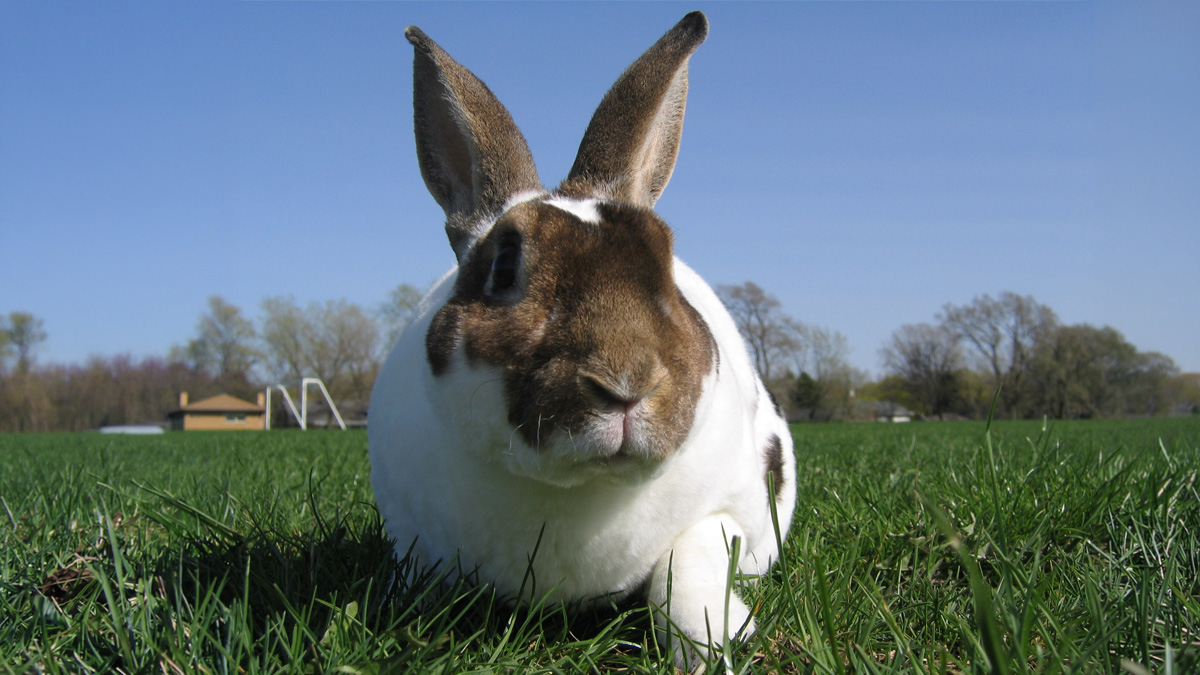
Quick answer: Are Rex rabbits good pets?
For many homes, yes. Rex rabbits are medium-sized, usually 7½ to 10½ pounds, and veterinarian-reviewed breed guides describe them as patient, good-natured, and docile, and call them one of the friendliest pet breeds, suited to beginners and experienced owners alike. Their short, velvety coat is easy to care for. One breed-specific caution is the feet: the Merck Veterinary Manual notes that Rex rabbits appear more prone to sore hocks, because their short coat gives the back feet less natural cushioning. Solid flooring and soft resting areas matter for every rabbit, and especially for a Rex. Get the footing right, and a Rex is an easy rabbit to love.
The first touch is the surprise. Rex fur doesn’t lie flat like most rabbit coats. It stands up short and dense, like crushed velvet, and it feels almost too soft to be real. Add a broad head, upright ears, and curly whiskers, and the Rex is a rabbit people remember.
At a Glance
| Size group | Medium |
|---|---|
| Adult weight | About 7½ to 10½ pounds (Mini Rex: up to 4½ pounds) |
| Coat | Short, dense, and velvety; sheds less than many breeds |
| Recognized colors | 16 color varieties |
| Often described as | Patient, good-natured, docile |
| Often suits | Beginners and experienced owners; families whose children are supervised |
| Special care | Solid flooring with soft resting areas |
What Makes the Coat So Soft
Most rabbits wear two kinds of fur: a soft underlayer and longer, coarser guard hairs on top. A Rex lacks those longer guard hairs, and that’s what gives the coat its plush, velvety feel. A bonus: Rex rabbits generally shed less and need less grooming than many longer-haired breeds. The Merck Veterinary Manual recommends brushing short-haired rabbits at least twice a week, and with a Rex, that’s a quick, pleasant job.
What Rex Rabbits Are Like
Patient, good-natured, and docile are the words veterinarian-reviewed breed guides use most for the Rex. Many Rex rabbits would rather not be picked up and held, but they’ll often come over on their own to play and cuddle, which is a lovely way for a rabbit to say it trusts you.
Rex rabbits are described as great family pets, even with children, as long as the children are supervised. Their back legs are strong, and a frightened Rex may kick or scratch, so calm, careful handling matters for everyone in the house. When lifting is necessary, Merck’s advice is to always support the hind end and back legs. Breed offers clues about temperament, but every rabbit is an individual.
Kind to Their Feet
That velvet coat has one trade-off. The Merck Veterinary Manual notes that Rex rabbits appear predisposed to sore hocks, damaged skin on the heels of the back feet, because they lack the longer guard hairs that normally cushion that spot. Footing makes a real difference. UC Davis’s veterinary school advises a solid floor rather than bare wire for every rabbit, and for a Rex it matters even more: think solid flooring with some grip, plus soft resting spots like a rug or a thick layer of hay. Bringing a new rabbit home covers a safe starter setup.
Rex or Mini Rex?
The Mini Rex is a separate breed with the same plush coat in a much smaller body, up to 4½ pounds. The American Rabbit Breeders Association says it was developed in Texas in 1984 and recognized in 1988, and it has become one of the most popular breeds at shows. Its small size puts it with the more delicate small breeds, which the Merck Veterinary Manual says need especially careful handling.

The “King of the Rabbits”
The Rex comes from France and was first shown publicly at the Paris International Rabbit Show in 1924. American breeders brought it to the United States that same year. The American Rabbit Breeders Association still calls it the “King of the Rabbits,” and recognizes 16 color varieties of that famous coat.
Who a Rex Suits
- A good match: first-time owners and experienced ones alike, families with children who’ll have adult help, and anyone who wants a friendly, medium-sized rabbit with easy grooming.
- Plan ahead for: soft, solid flooring everywhere the rabbit spends its time, and calm handling for those strong back legs.
Still weighing breeds? How to choose a pet rabbit compares the Rex with the Dutch, the New Zealand, and others.
FAQ
Do Rex rabbits shed?
All rabbits shed, but Rex rabbits generally shed less than many breeds because they lack the longer guard hairs. Regular brushing still helps.
Are Rex rabbits good for beginners?
Veterinarian-reviewed breed guides call Rex rabbits wonderful pets for both beginners and experienced owners, with the right diet, housing, and environment. Their patient, good-natured reputation is a big part of why.
What’s the difference between a Rex and a Mini Rex?
Size. Both have the same plush coat, but a standard Rex weighs about 7½ to 10½ pounds, while a Mini Rex tops out at 4½ pounds. They’re recognized as separate breeds.
Sources
Breed facts on this page come from the veterinary, university, veterinarian-reviewed, and breed-association sources listed below, checked October 2026. Breed descriptions are summarized in RabbitHutch.org’s own words and traced here.
- PetMD—“Rex Rabbit.” By Catherine Gose, CVT; reviewed by Laurie Hess, DVM, DABVP; updated October 26, 2023. Verbatim: “Rex rabbits are medium-sized rabbits with an average weight of 7.5–10.5 pounds. They have a broad head, upright ears, strong legs, extraordinarily soft fur, and curly whiskers.” “Patient, good-natured, and docile are just a few words used to describe a Rex rabbit’s personality. Rex rabbits are known to be one of the friendliest pet rabbit breeds. A Rex rabbit may not enjoy being picked up and held but will generally gladly come to you to play games and to cuddle.” “Rex bunnies are great family pets, even in homes with children, as long as kids are supervised. They have very strong legs and may kick or scratch if they feel frightened or insecure.” “All rabbits shed, but Rex rabbits lack the longer guard hairs that other breeds have. Because of this, they generally shed less and don’t typically require as much grooming as several other rabbit breeds with longer hair.” “Rex rabbits originated in France in the early 1900s.” “Rex rabbits can be wonderful pets for both experienced and beginner rabbit parents.” Backs the French origin, weight, appearance, coat, temperament, family fit, and beginner lines. Used for breed description only; the foot-health claim on this page comes from Merck. Checked October 3, 2026. Source link.
- Merck Veterinary Manual—“Noninfectious Diseases of Rabbits.” Professional version; Joerg Mayer, DVM, DABVP (ECM), DECZM, DACZM, University of Georgia College of Veterinary Medicine; last updated September 2024. Verbatim, under Ulcerative Pododermatitis: “The Rex appears to be predisposed because of the lack of the longer guard hairs that usually act as a cushion over the predisposed area of the hock.” Backs the sore-hocks note in the Quick answer and “Kind to Their Feet.” Checked October 3, 2026. Source link.
- UC Davis School of Veterinary Medicine—“Rabbit Care.” John Gardiner; April 11, 2019. The page advises a solid surface rather than bare wire flooring. Backs the flooring advice. Checked September 29, 2026. Source link.
- American Rabbit Breeders Association—“Recognized Breeds.” Breed standards organization. Verbatim: Rex: “First shown publicly at the Paris International Rabbit Show in 1924… Imported to the US in 1924 by John Fehr and Alfred Zimmerman.” “Today the ‘King of the Rabbits’ can be shown in 16 color varieties.” “Maximum weight 10.5 lbs.” Mini Rex: “The Mini Rex is consistently the #1 or #2 top entry at any ARBA Convention. Developed in 1984 in Texas…” “The plush coated Mini Rex became a recognized breed in 1988.” “Maximum weight 4.5 lbs.” Backs the history, color count, nickname, the Mini Rex’s show popularity, and both breeds’ maximum weights. Checked October 3, 2026. Source link.
- Merck Veterinary Manual—“Selecting a Rabbit.” Laurie Hess, DVM, DABVP; full review July 2026. Verbatim: “Larger rabbits are often calmer and sturdier. Smaller rabbits are more delicate and need especially careful handling.” “Short-haired rabbits need brushing at least twice a week, while long-haired rabbits need more frequent grooming.” Backs the brushing frequency and the careful-handling note for small breeds such as the Mini Rex. Checked September 30, 2026. Source link.
- Merck Veterinary Manual—“Description and Physical Characteristics of Rabbits.” Laurie Hess, DVM, DABVP; full review July 2026. Verbatim: size classes place Dutch, Holland Lop, and Mini Rex among small breeds (2–6 pounds), Rex among medium breeds, New Zealand among large breeds, and Flemish Giant among giant breeds. Backs the size group in the At a glance table. Checked September 30, 2026. Source link.
- Merck Veterinary Manual—“Providing a Home for a Rabbit.” Laurie Hess, DVM, DABVP; full review July 2026. Verbatim: “When lifting a rabbit, always support the hind end and back legs… Never pick up a rabbit by the ears.” Backs the lifting guidance. Checked September 30, 2026. Source link.
- Judgment calls. The “Often suits” line, the “who a Rex suits” notes, and the comparisons with other breeds are RabbitHutch.org’s own reasoning, built on the sourced facts above rather than quoted from any one source.
Found this helpful? The kindest thing you can do is leave a tip or share it with another rabbit person—every guide here stays free, always.
Get rabbit care tips
Join the Hutch list—I write when there’s something worth hopping over for, not every other Tuesday.