

Quick answer: What herbs can rabbits eat?
Healthy adult rabbits can enjoy fresh sweet basil, cilantro, dill, parsley, or mint mixed in with other leafy greens; NC State and Purdue include these herbs in rabbit feeding guidance. Cilantro is low in calcium and can be a regular part of the mix; basil, mint, dill, and parsley carry more calcium than most salad leaves, so offer them in small, rotating amounts. Start with a tiny amount, count it toward the day’s greens, and keep hay as the rabbit’s main food. Your rabbit’s nose will soon tell you which ones are favorites.
Five safe herbs for rabbits
This list stays short on purpose. Each herb below appears in rabbit-specific guidance from a U.S. veterinary school or a veterinarian-reviewed hospital source. That makes it easier to choose with confidence.
At a glance: five herbs side by side
There’s a quiet joy in this errand—every leaf you pinch and sniff, you’re really choosing for the wiggling nose that’s waiting to greet it back home. The smell finds you first; brush the basil and it gives back something warm and sweet. These five are the safe ones to look for, with each full profile just below.
-
Sweet basil
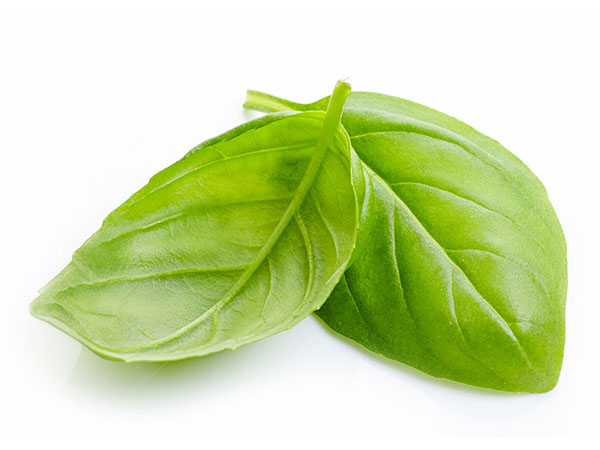
Big, tender, glossy oval leaves.
Small amounts -
Cilantro
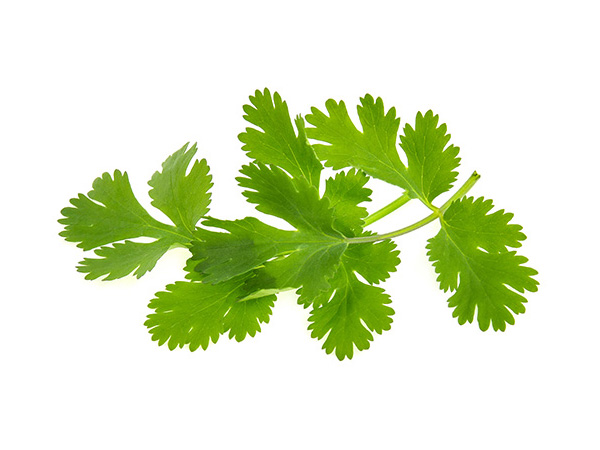
Also named coriander leaves. Flat, lacy, deeply cut leaves. Thin stems.
Daily-friendly -
Dill
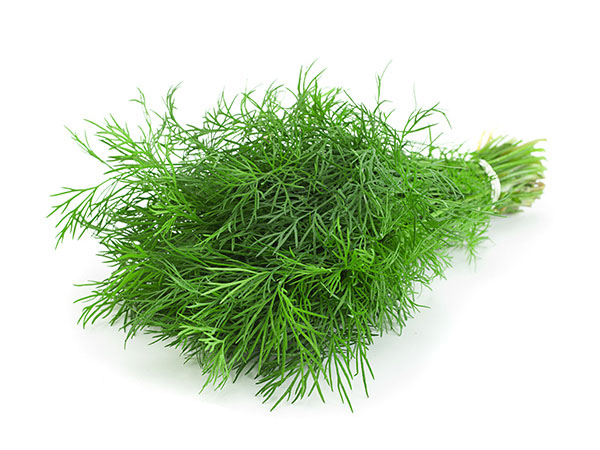
Thread-fine, feathery blue-green fronds on tall, hollow stems.
Small amounts -
Mint
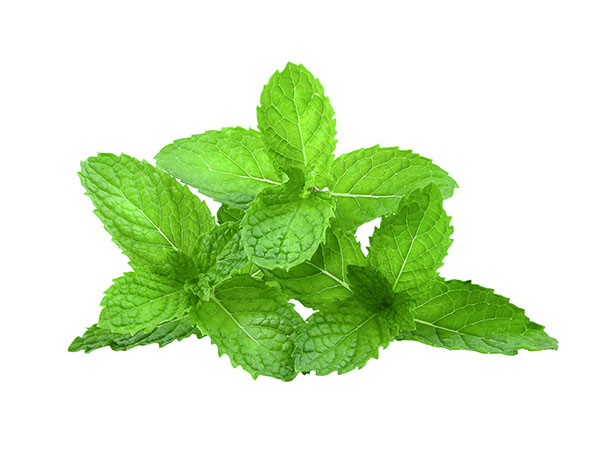
Bright green, deeply veined, scallop-edged oval leaves with a slight fuzz.
Small amounts -
Parsley
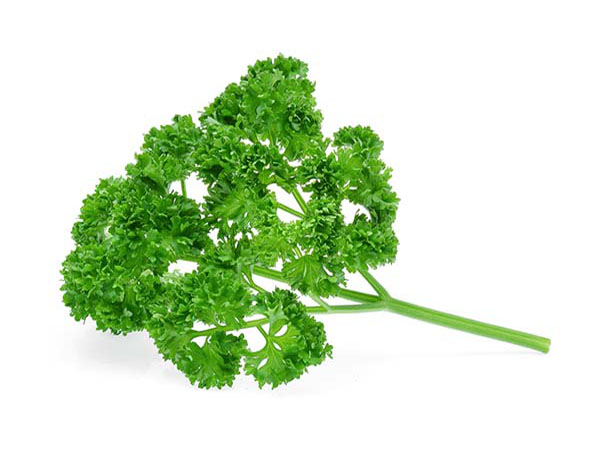
Curly-leaf 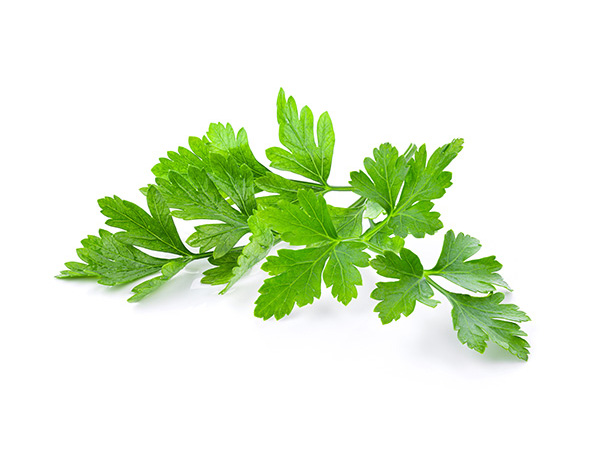
Flat-leaf (Italian) Tightly ruffled curly leaves, or flat, celery-like leaves.
Small amounts
Sweet basil
Soft, a little sweet, and familiar from the kitchen. Basil smells like summer when you tear a leaf, with a warm, peppery edge. The kind to grow is plain sweet basil—the big, tender green leaves sold for pesto and tomatoes. Sweet basil is the one the veterinary sources mean when they say only the single word “basil.” USDA measures fresh basil at 177 mg of calcium per 100 grams—more than most salad leaves—so a few leaves at a time, rotated with other greens, is the right amount. NC State includes basil in its rabbit greens table, and Purdue includes basil among clean, fresh leafy greens for pet rabbits. Use plain leaves and tender stems. Pesto, seasoned basil, and basil packed in oil are human foods, not rabbit greens.
Worth knowing: other basilsGarden centers sell other basils too, and the labels are important to read. The NC State Extension Gardener Plant Toolbox lists Thai basil as a cultivar—a named garden variety—of the same plant as sweet basil, Ocimum basilicum, and lemon basil and small-leaf types such as spicy globe are sold the same way, chosen for a particular flavor. The same toolbox lists holy basil, also sold as tulsi, as a different species, Ocimum tenuiflorum, grown for Ayurvedic medicine. The rabbit feeding guides on this page name only “basil,” with no type given, so none of these flavored or medicinal basils has rabbit-specific feeding support of its own. Sweet basil is the well-supported choice for the bowl; the others are lovely plants to keep for your own cooking.
Cilantro
Bright and a touch citrusy, with tender stems that give a nice crunch. Cilantro—also called coriander leaves—is often a favorite and one of the easiest to fold into a mixed salad. USDA measures fresh cilantro at 67 mg of calcium per 100 grams, the lowest of these five herbs and not far above the salad lettuces, which makes it the easiest herb to offer regularly. Rinse well, pat dry, and mix it into the salad.
Dill
Feathery, airy fronds with a soft, clean scent. Dill adds a light perfume without adding fruit sugar. NC State includes dill in its greens table. USDA measures fresh dill at 208 mg of calcium per 100 grams, the highest of these five herbs, so a small sprig, rotated with other greens, is plenty.
Worth knowing: flowers, unripe, and ripe seed headsDifferent from the leaves and stalk are three other parts: flowers, soft unripe seeds, and hard ripened seeds. At the end of the season dill produces upside-down umbrella-shaped clusters of small yellow flowers. Eventually the flowers are replaced by soft green seeds. The rabbit-feeding sources here do not address offering the flowers or soft seeds. Later the seeds harden and turn brown. The rabbit-feeding sources here do not address ripened, dried dill seeds either, so this guide does not recommend feeding them.
Parsley
Fresh, slightly peppery, with a satisfying bite. Parsley is rabbit-safe, and like basil, mint, and dill it is best offered in small, rotating amounts rather than as a large share every day. USDA measures fresh parsley at 138 mg of calcium per 100 grams, and University of Florida Small Animal Hospital advises offering only small amounts of parsley because of calcium or oxalic acid. Purdue also notes that a particular green—parsley is one example—can occasionally be linked with soft stool—mushy or loose droppings—in an individual rabbit. A few sprigs at a time, rotated with other greens, keeps things balanced. Curly-leaf and flat-leaf, also called Italian, are the same plant—the NC State Extension Gardener Plant Toolbox lists both names on one plant profile—so either works the same way in the bowl.
Mint
Cool, strong, and very aromatic. Purdue includes mint among clean, fresh leafy greens for pet rabbits. USDA measures fresh spearmint at 199 mg of calcium per 100 grams, so a few leaves at a time, rotated with other greens, is the right amount. Choose plain culinary mint sold for eating, typically spearmint, and offer the fresh clippings from the plant. Avoid mint products that are not meant for rabbits like candy, sweetened tea, or essential oil—a super-concentrated plant extract. Mix fresh leaves into the salad along with the other herbs here.
How much herb can a rabbit eat?
Think of herbs as part of the salad, not an extra course. Hay stays number one—the fiber that keeps the gut, the long digestive tract, moving.
For all fresh greens combined, NC State generally recommends about 1/2 cup of greens per 2 pounds of body weight each day—a smaller cup for a small rabbit, more for a larger one, scaled the same way. Use an American measuring cup and picture it lightly packed, not pressed down hard.
Herbs are already part of that daily measurement of greens, not an extra helping on top. Cilantro is the one herb here that sits near the low-calcium salad lettuces, so it can be a regular part of the mix. Basil, mint, dill, and parsley carry more calcium than most salad leaves—from 138 to 208 mg per 100 grams by USDA’s figures, against about 33 to 36 mg for romaine and leaf lettuce—so offer them a few leaves or a small sprig at a time, rotated rather than served as a large share every day. That follows NC State’s approach of building the salad from lower-calcium greens and rotating the higher ones in smaller amounts. The greens guide’s calcium chart shows all five alongside the salad leaves.
A rabbit with urinary trouble, ongoing soft stool, or another medical condition may need a different mix from a rabbit-savvy veterinarian. For everyone else, rotating a few different herbs through the offering, rather than filling it with just one kind, keeps the bowl varied and the bunny curious.
How to introduce a new herb:
- Begin with the usual diet
Choose to offer a new food only when your rabbit is eating hay well and passing normal droppings—round, firm, and regular. It is easier to notice a reaction when the rest of the routine stays familiar.
- Try only one new thing
Offer only one new thing in a day. Add a small piece of the new food to their normal diet. NC State advises slow introductions. Reactions could be immediate, obvious, subtle, or delayed for a few days. Going slow lets you pin down the cause.
- Watch the rabbit
Keep an eye on appetite, behavior, comfort, and droppings. If soft stool or digestive upset follows at all, stop the new items, and ask a veterinarian what fits your rabbit. If loose stool lasts, or if eating slows or stops, call a veterinarian right away. Gut slowdown—gastrointestinal stasis, when the gut slows way down—needs prompt care. If there’s no problem from the new food, repeat the new routine exactly again for a few more days before testing a different item.
Starting slow is excellent care. That careful pace helps you learn what works for your rabbit.
Fresh herbs or dried herbs?
Fresh is the everyday choice most of us reach for, and there’s a simple reason that feels right. The rabbit-care sources that name these herbs talk about clean, fresh leafy greens. They give no rabbit-specific serving amount for dried versions, including home-dried sprigs. That quiet gap is why fresh stays the clearer default.
A home-dried sprig may look familiar, but appearance is not a reliable serving rule. Drying changes how much plant fits into a small space.
A spoon of dried leaves can hold far more plant than a spoon of fresh leaves because much of the water is gone. The cited rabbit-feeding guides give no conversion from fresh to dried herbs.
Unless your veterinarian has suggested something different, leave commercial dried blends, powders, tinctures, essential oils, “calming” mixes, and medicinal products on the shelf. Some contain concentrated extracts or added ingredients, and the cited feeding guides do not cover them. Fresh leafy herbs remain the choice those guides describe.
How to grow herbs for rabbits indoors
These herbs can be living greenery on a windowsill, whether or not you clip leaves for your rabbit’s salad that day. Enjoy them as plants in their own right; when you do share, clip and rinse fresh leaves, and keep the pots, soil, and plant-care products out of reach.
A kitchen herb garden can be very small: one pot on the sill, another under a light, and clean scissors nearby. For established plants, University of Maryland Extension recommends a well-draining container and potting mix—the light, fluffy bagged soil made for edible plants grown in containers—plus at least five hours of sun in a south- or west-facing window. In winter, many herbs would benefit from a grow light for 14 to 16 hours a day. It helps convince them it is still summer and keeps them strong and sturdy.
Finding seeds and starter plants
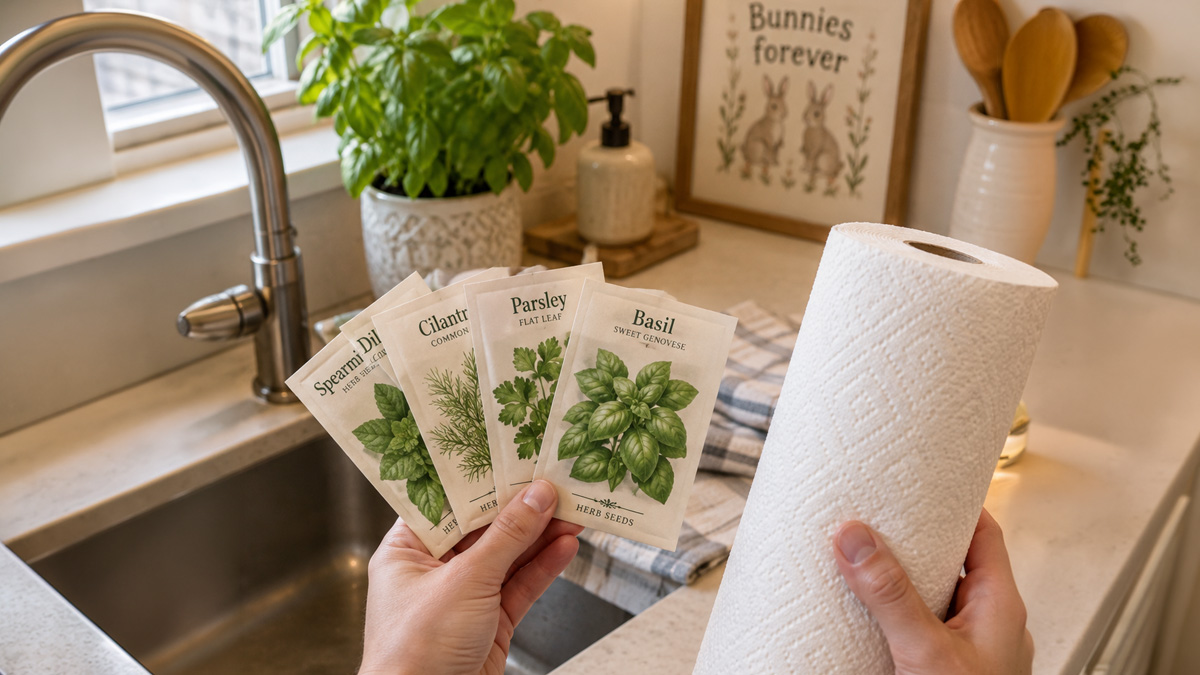
All five of the rabbit-specific herbs in this guide are easy to find. For instant bunny-nibbles, you can skip seed starting (germination) entirely with a small potted herb from the local produce section or a garden center. Many grocery store produce sections sell small potted herbs year-round—meant to come home and move into a bigger pot with fresh potting mix. Seed packets are usually found at garden centers and hardware stores seasonally—roughly February through October. If it’s the wrong season, or a particular herb isn’t on the shelf, some online retailers seeds ship year-round.
- Start with sweet basil, cilantro, or mint. Each does well in a container, and each has rabbit-specific feeding support. Giving each its own pot means it doesn’t have to compete for nutrients with a neighbor plant
- Give dill a deeper container. Its taproot—a long central root that likes room—wants more depth than a shallow windowsill pot. A pot at least 10 to 12 inches deep is better.
- Give parsley its own roomy pot. Good drainage and steady light matter.
- Use drainage holes for adult plants. Drainage holes—the small openings in the bottom that let extra water escape—let extra water leave the pot instead of collecting around the roots. Set a saucer underneath to catch leaks.
- Clip, rinse, and serve. Harvest clean leaves and tender stems, rinse them under running water, and leave soil, fertilizer, and plant-care products behind. Serve at room temperature.
How long until the first leaf when growing from seed?
Patience has its rewards. For our bunny-specific selections, cooperative extension sources say the times in the table are typical for seeds planted the traditional way—directly into potting mix. See more below: speed up seed germination ↓
| Herb | Typical wait for a first small harvest |
|---|---|
| Sweet basil | Utah State University Extension lists germination at 10–14 days; harvesting can begin once the plant has 6–8 leaves. |
| Cilantro | Illinois Extension notes leaves can be cut once plants reach about six inches tall; one common variety is ready in 28–40 days. |
| Dill | Utah State University Extension lists germination at 7–21 days, and leaves “can be harvested at any time after seedlings emerge.” |
| Parsley | University of Minnesota Extension puts germination at two to five weeks—the slowest of the five to sprout. |
| Mint | Mint is often started from a small nursery plant or cutting rather than seed. Utah State University Extension notes the reason is that seed-grown mint often doesn’t stay true to type. But there are commercial seeds available if you want to go that route. Plants are ready to snip once they reach 3–4 inches tall. |
Can you speed up seed germination?
The timelines printed on seed packets assume your seed is going directly into moist potting mix. That works, but traditional soil and timelines aren’t your only option. Several of our five bunny-safe herbs have popular tricks to get them sprouting faster.
Fast-track seed sprouting trick with paper towels (Applies to sweet basil, cilantro, dill, parsley, and mint)
The mechanics are simple: place your seeds on a damp paper towel. How damp? Not dripping. Get the paper towel wet and wring it out by hand. Place paper towel in a plastic bag or container that holds moisture. Place your seeds on the paper towel (damp toothpick or bamboo skewer can help). Then seal the bag or container. Keep them in a comfortably warm spot. Home temperatures are normally fine, but keep them out of direct sun rays.
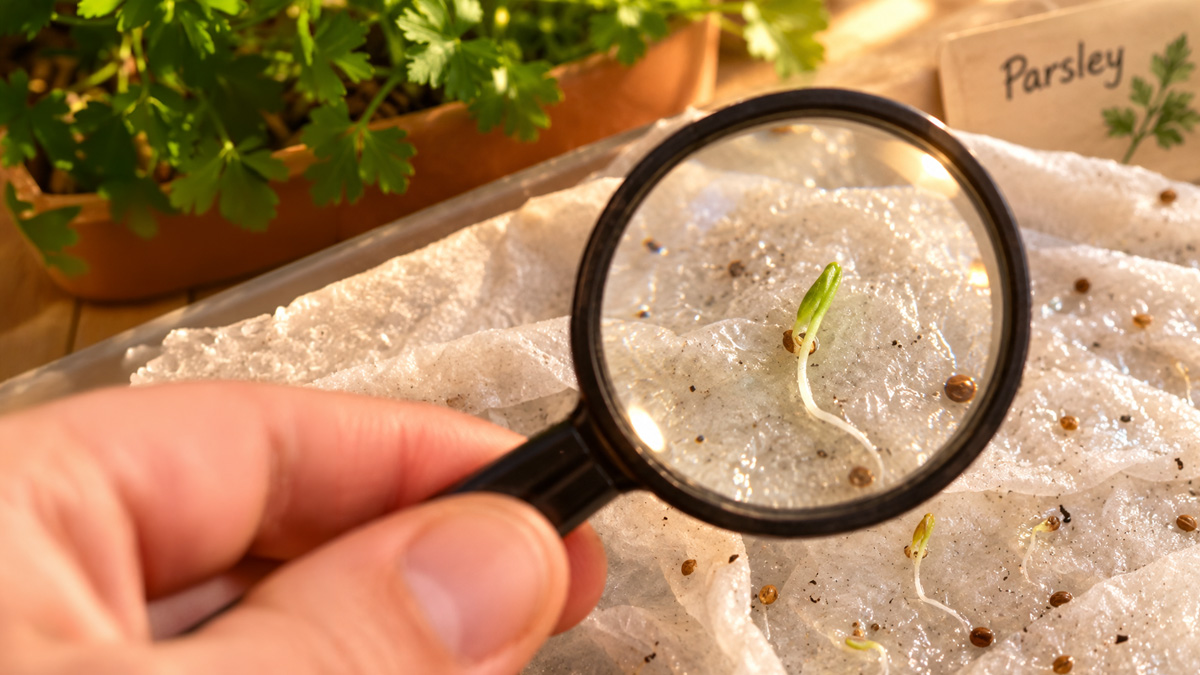
Handling tender seed sprouts
You may need a magnifying glass to see them, but after a few days start regularly looking for tiny white roots to pop out of your seeds. Once they show up, you can move them to potting mix (white root aimed down in soil). But it’s often easier if you wait just a few more days for the green upper part of the plant to show up. This makes it both easier to understand how to plant it (green up, white down) and easier to pick up. Be extremely gentle—emerging roots and shoots are fragile, and you don’t want to snap that brand-new root or smash the tiny “hairs” on the root surface. Toothpicks or bamboo skewers have advantages over fingers, letting you scoop up your newly born plant. But, if the sprout has seriously woven itself into the paper towel don’t bother trying to pull it off. Simply cut around the area (clean scissors), keeping a tiny section of the paper towel attached to the roots, and plant sprout and towel together—probably not ideal, but not terrible either.
Fast-track soak secrets for parsley seeds (and why not for the others)
Before planting, some seeds benefit from soaking. It can soften a seed’s outer shell, basically telling the plant it’s time to wake up.
- Parsley: Parsley seeds have hard outer coats, plus their own natural sprouting inhibitors, making them agonizingly slow to sprout. These are your prime candidate for soaking! Drop them in room temperature water for 12 to 24 hours before planting. They can take it like a champ and come out better for it. It may shave days or weeks off their germination time. (See the next tip about the Fast-Track Stack to maximize parsley’s speed potential.)
- Cilantro: Cilantro has two seeds inside of one hard husk. To help give the seeds a head start, crush the husk lightly to break the two apart. Each seed can become a plant. Plant each directly in your seed starting mix. Soaking is not typically suggested for cilantro.
- Dill: Dill seeds are very thin and light weight. Like mint, dill will be difficult to deal with if soaked, sticking to fingers and each other. No soak for dill.
- Basil: Skip soaking basil. Basil seeds are mucilaginous—their outer shell forms a thick, gelatinous goop in water. It’s easy to let them get so mushy that they’re no longer viable. Plus, sticky basil seeds are very fiddly to plant. Skip soaking basil.
- Mint: Mint seeds are tiny and delicate—like dill, soaking usually makes them stick to your fingers, get lost, or end up lumped together when planted, so skip the pre-soak for mint.
Fast-track stack: Soaking + paper towels (parsley only)
For maximum fast-tracking, you can use both methods: first a soak and then the paper towel trick. Among our five bunny-safe herb seeds, the stack is only for parsley!
Note on Parsley: You might hear that parsley hates “root disturbance.” Don’t worry—this doesn’t mean parsley can’t be moved! It just means you shouldn’t tear up its roots. You can easily lift pre-sprouted seeds into soil with a toothpick or skewer, or transplant young parsley plants as they grow. Just move the whole rootball with its surrounding soil intact, and parsley will settle into its new home just fine.
Second use for paper towel trick: testing old seeds
If you have an old packet of seeds lying around, and you’re not sure if the seeds are even good anymore, you can use the damp-paper-towel test. The University of Alaska Fairbanks Extension suggests it. Not all the seeds in an old packet fail at the expiration date. Sometimes they’ll all still sprout. Other times, maybe half of them come through. And other times there could be just one or two lonely over-achiever seeds left in the whole packet. It would be disappointing to plant these unknowns in soil and wait. But the paper towel trick avoids that disappointment, keeps your effort low, and treats the expiration date on seed packet as a suggestion, not a rule.
Warmth: do seeds need it?
For most of these five, not really. A spot that feels comfortable to you—somewhere approaching 70°F—will have cilantro, dill, parsley, and mint glad to sprout. Three of them are even cool-season herbs, plants that come up in the mild weather of spring and fall, so they’d rather not be too warm.
Basil is the exception. It comes from warm climates and is sensitive to cold. University of Illinois Extension notes it sprouts best once the soil reaches at least 70°F. While Utah State University Extension goes further to say the ideal temps are between 75°-85°F. If your house runs warm, you have nothing special to add for basil. If you keep a cool house, try a warm windowsill or a seedling heat mat—a warming pad made to sit under seed trays—for the cozy start basil likes.
Light for seeds
Our bunny-specific seeds are all small seeds. Small seeds should be planted shallow, so they can break through the soil.
- Basil likes the shallowest start of the group. Utah State University Extension suggests sowing it about an eighth of an inch deep and covering it lightly—more like a dusting of soil over the top.
- Cilantro, dill, parsley, and mint are happy a hair deeper—about a quarter inch of soil above them.
None of these fast track tricks come with a promise of success, but when done carefully, they often help slow starters pick up the pace.
Pots and soil
Soil for newly sprouted plants
When sprouts are so small you can barely see them, a plain seed starting mix, plain coco coir, or plain vermiculite can all be fine choices. Tiny roots like tiny particles that don’t compact easily. They like something they can weave their way through unimpeded. Regular sand or heavier potting soils might compact and trap roots that aren’t strong yet. As the plant grows, switch to regular potting mix intended for edible plants.
Water warning for furniture
Leaks are inevitable with plants. Protect your house and furniture from moisture damage by using trays or saucers under planters. Paper planters, clay planters, or any planter really, need something protective underneath. Cheaper to replace a tray or saucer than a table, countertop, or windowsill.
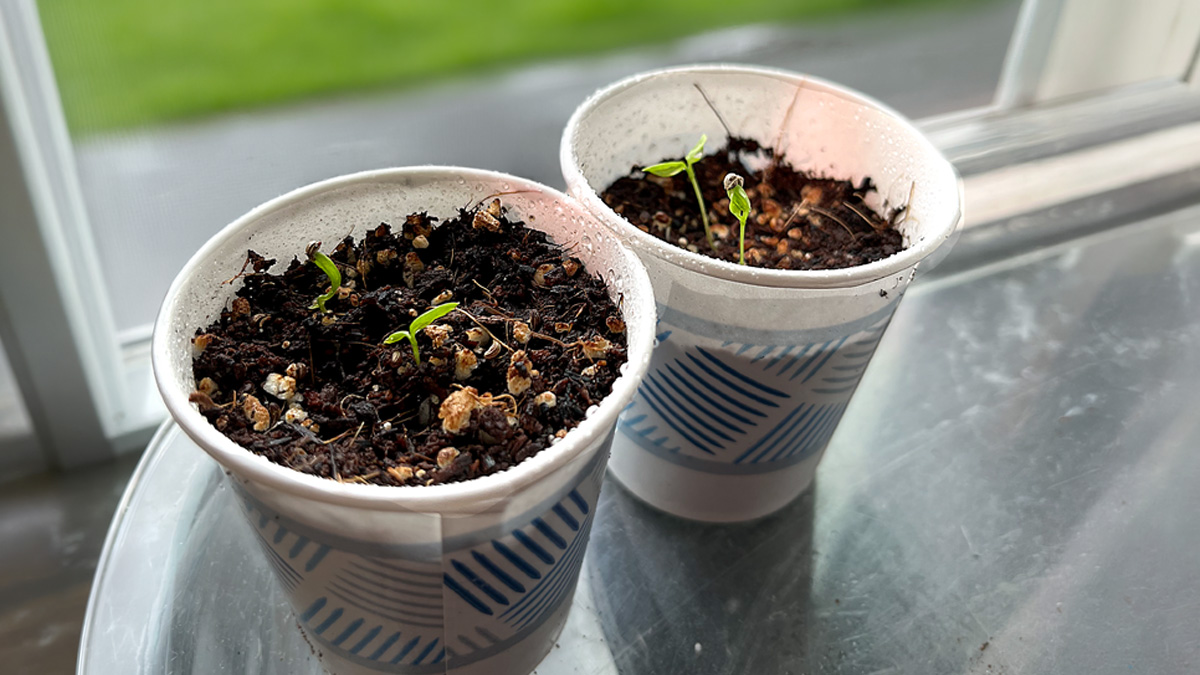
Dixie cup as tiny sprout pot
Small bathroom-type Dixie cups can be fine for a first planting pot for teeny sprouts. Drainage holes are recommended for most pots and you can punch a small hole (1/8 inch approx.) in these easily. However, because they’re so tiny, they dry out quickly anyway—so drainage holes matter less for them than for larger pots. Use a waterproof tray underneath them to catch leaks.
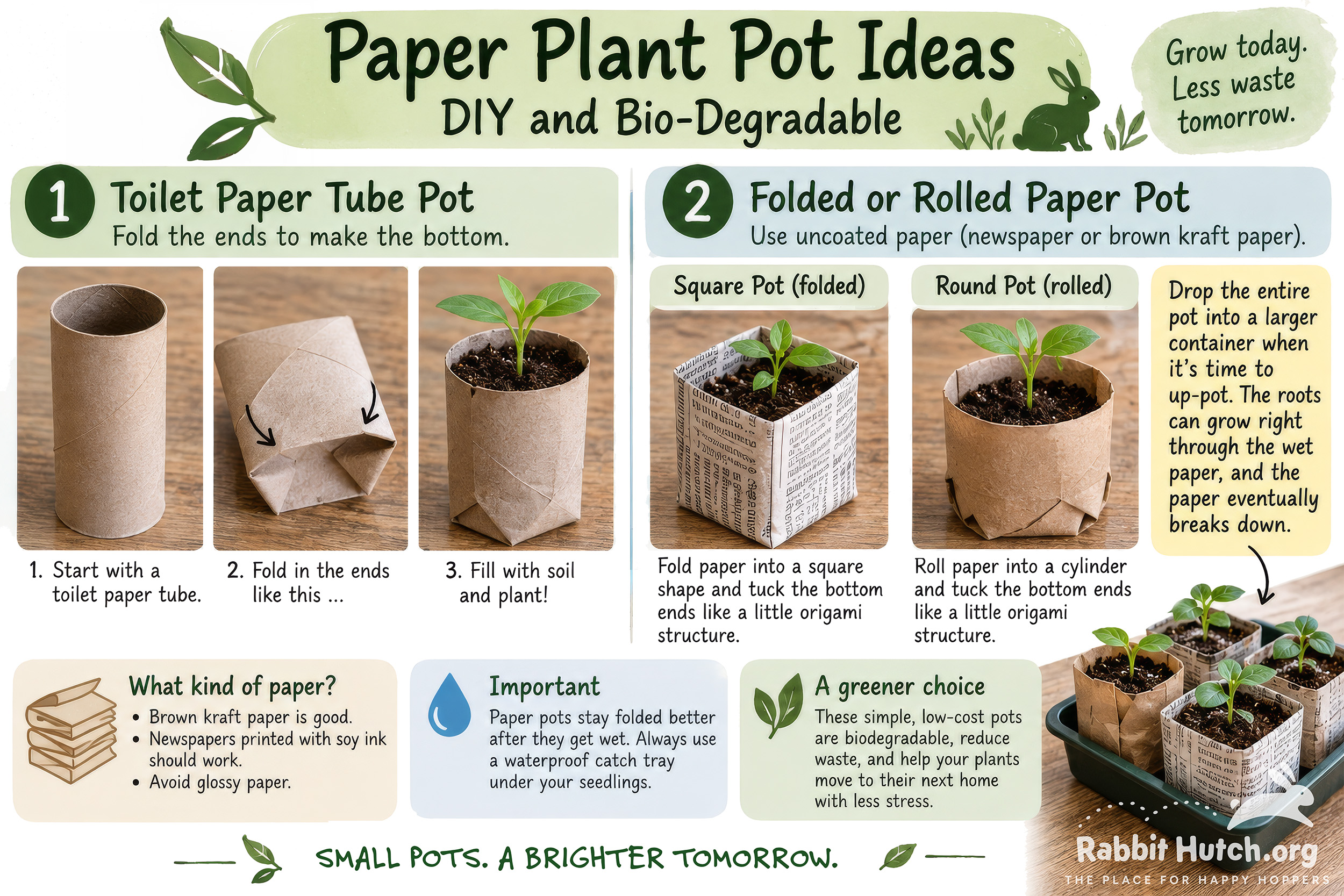
Paper plant pot ideas—DIY and bio-degradable
You can make your own bio-degradable pots. It’s simple. And you probably have the materials. There are two easy methods. One: fold down the ends of a toilet paper tube to create the bottom of the “pot,” and becomes instant seedling pot. Two: fold uncoated paper around a block to get a square shape, or around a can to get a round shape, and tuck the bottom ends together (like a little origami structure) to create a pot. (What kind of paper? Brown kraft paper is good. Newspapers printed with soy ink should work. Avoid glossy paper.) Paper pots stay folded better after they get wet. Advantage: either of these bio-degradable paper seedling pots allow you to just drop the entire plant and its “pot” into the next size container when it needs a bigger home. You don’t need to peel the paper off, and that avoids plant stress. The roots can grow straight through the wet paper, and the paper eventually breaks down becoming part of the soil. Waterproof catch tray is required for these, naturally.
Peat plant pots—bio-degradable
The pots are made of compressed peat. Available online and seasonally in garden departments. These have the same advantage as the bio-degradable pots above: you don’t need to remove the pot when transplanting it; the pot becomes part of the soil as it breaks down. Naturally, this one requires a waterproof catch tray for leaks too.
Sizing up: how do you know a plant needs a bigger container?
Here are four quick signs your bunny’s future snacks are ready to stretch out in a bigger pot:
- Roots Poking Out: If you see tiny white roots peeking through the drainage holes, or through the sides of a paper pot—the plant has run out of room.
- Constant Thirst: If you’re watering daily because the soil dries out in a flash, the roots have taken over and left no room for the soil to hold moisture.
- Wobbling: Top-heavy plants that look ready to tip over are begging for a sturdy, wider base.
- Hit a Growth Wall: If your seedling completely stops growing despite getting plenty of light and water, it’s likely root-bound.
Tip: When you move them up, make sure its new pot has good drainage holes so those fresh roots don’t get soggy from trapped water.
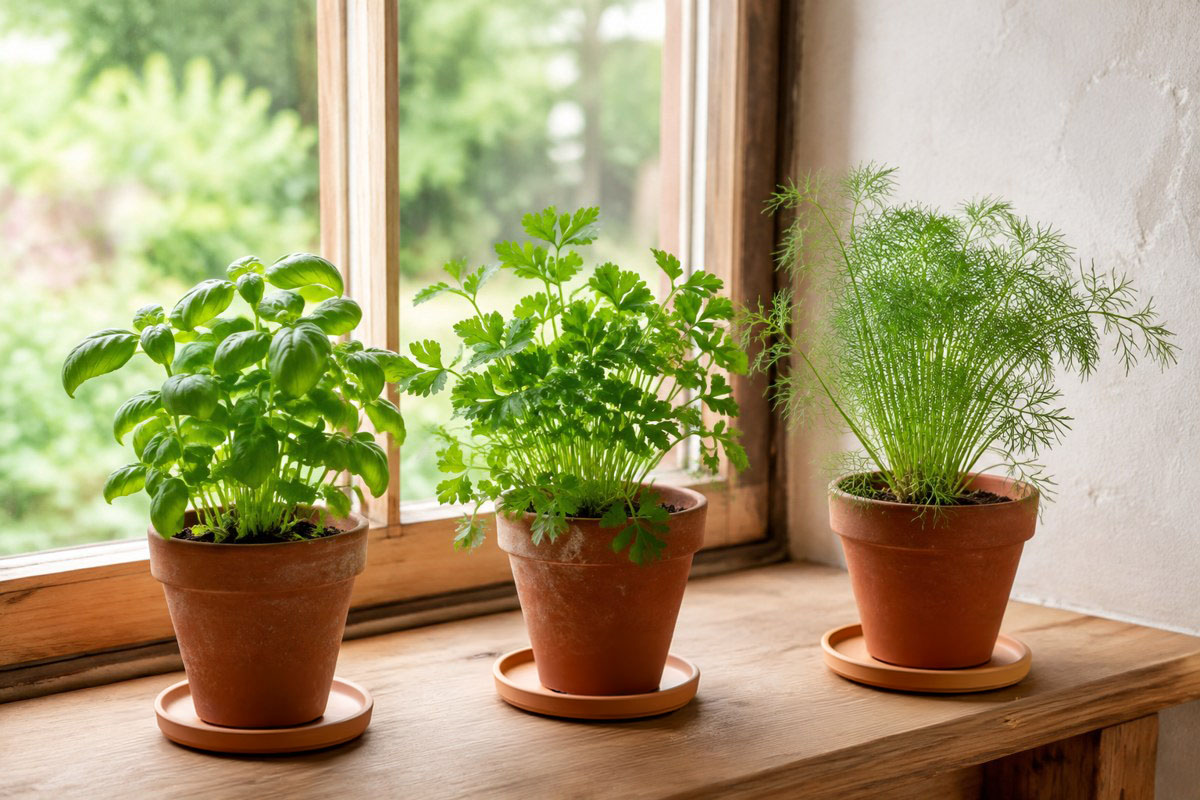
Clay plant pots
Clay pots “breathe” through their walls, wicking moisture out, which can be beneficial to the roots, but they may need watering more often. Clay pots sometimes come with clay saucers, which look nice. But clay saucers wick moisture too. Put a moisture barrier under these to save your furniture.
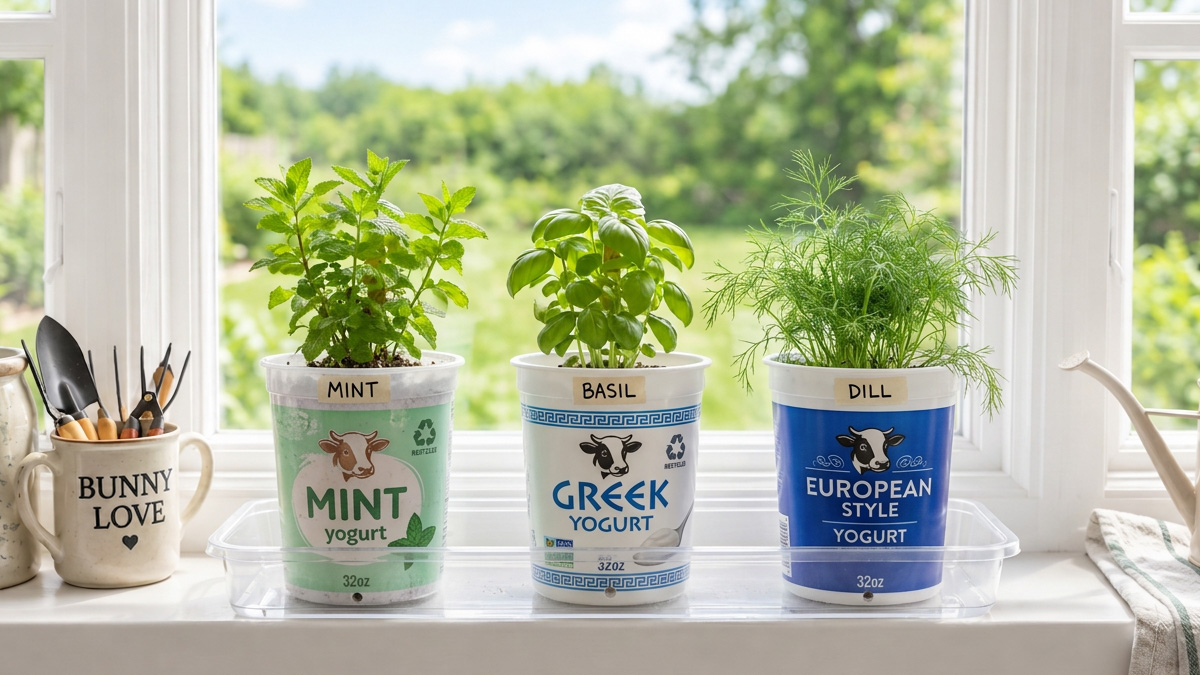
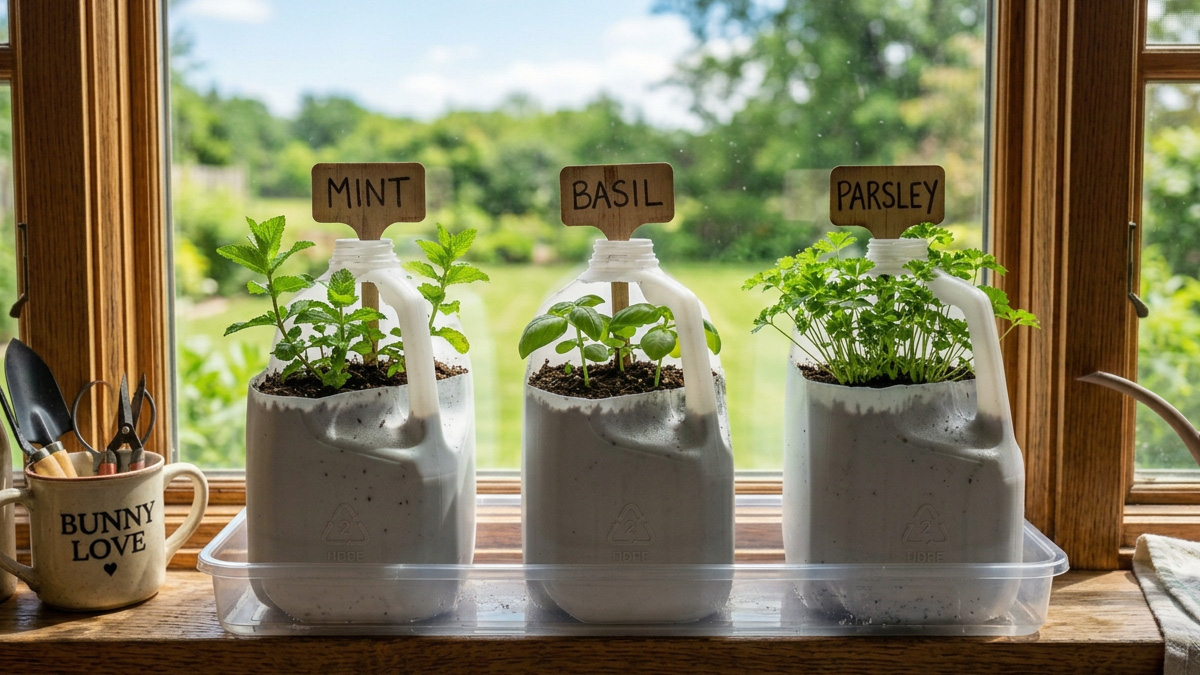
Plastic plant pot ideas—from your recyclables!
Before you buy commercial pots, check your recyclables—you might already have some great options! Here’s the thing: plastic pots aren’t porous like clay, so drainage matters. If you’re repurposing plastic containers, you’ll need to poke a few drainage holes in the bottom.
The next consideration is which plastics are food-safe. Look for the recycling symbol and stick with these: food-grade plastic #2 HDPE (milk jugs, quart bottles, sour cream tubs), #4 LDPE (squeeze bottles), and #5 PP/Polypropylene (yogurt cups, takeout containers). University of Maryland Extension recommends these to avoid chemical leaching. Just make sure the container held only food before—if it ever held anything else, don’t use it. Add waterproof saucers or trays to catch drips, and you’re good to go.
At the RabbitHutch garden, a new packet of parsley seed was used for a fun little test. Seed was soaked for 24 hours at regular room temperature, then placed on a single layer of damp paper towel in a closed plastic Ziploc bag. I do one thing that’s not mentioned in gardening guides, and probably isn’t needed at all, but I add one drop of 3% hydrogen peroxide to the damp paper towel. My aim with it is purely to slow down any mold or mildew that might sneak in during non-sterile handling.
Germination began in 4 to 5 days! Tiny white roots were spotted on only a few of the seeds at first, via magnifying glass. It took a few more days for the others to follow suit. Then the green upper plant portion came after.
Sprouts were carefully lifted with a bamboo skewer to damp seed starting mix. The white root section was lightly covered, the green portion extended upward, naturally. Another non-traditional thing I do is add a little plain rooibos tea to the watering can, because it seems to inhibit fungus gnats or the fungus they would normally feed upon. I also don’t experience “damping off disease”—it causes young plants to drop over dead without warning—at all since using this method.
The peroxide and Rooibos are not horticultural practice, so I reserve mentioning to this until the bottom of the page, rather than sway you unnecessarily!
It’s not guaranteed your seeds will respond this quickly. Soak time, temperature, seed freshness, variety, and growing conditions all play a role—but the possibility of speed is real!
FAQ
Can rabbits eat Thai basil or holy basil?
The rabbit feeding guides name only “basil,” which on an American shelf means sweet basil. Thai basil, lemon basil, and holy basil (tulsi) are different varieties or species those guides never cover—see the basil entry above for the full distinction.
Can rabbits eat parsley every day?
Small, rotating amounts are the better choice. USDA measures parsley at 138 mg of calcium per 100 grams, and University of Florida advises offering only small amounts because of calcium or oxalic acid. Basil, mint, and dill are actually higher in calcium by USDA’s figures, so the same approach suits all four—see how much herb a rabbit can eat.
Can rabbits eat dried herbs?
The cited rabbit-feeding guides describe clean, fresh leafy greens and give no portion for dried herbs, including home-dried sprigs. See Fresh herbs or dried herbs? above for the evidence limit.
Where can I buy rabbit-safe herb seeds or seedlings?
Garden centers carry seed packets in spring and summer, and grocery store produce sections often sell small potted herbs year-round. Online seed retailers fill the gap the rest of the year—see how to grow herbs for rabbits indoors above.
How long before I can feed my rabbit herbs I’m growing?
It depends on the herb—basil and dill can offer a first light harvest within a few weeks, while parsley is slower to start. See how long until the first leaf above for specifics per herb.
Sources
Links checked September 11–22, 2026. These sources support the guidance; this article has not had an independent veterinary review.
- NC State Veterinary Hospital, “Caring for Your Pet Rabbit”—no individual author or publication date shown. Verbatim: “a daily salad that consists of leafy greens and herbs”; “rotating through the higher calcium/oxalate greens in smaller quantities.” Supports the overall greens amount, slow introduction, basil, cilantro, dill, and parsley as rabbit greens, and rotating higher-calcium greens in smaller amounts. Its greens table also rates calcium and oxalate by category, crediting nutritiondata.com and lowoxalateinfo.com; this page does not use those ratings.
- Purdue University College of Veterinary Medicine, “Rabbit Care for Pet Owners”—no individual author or publication date shown. Verbatim: “clean, fresh leafy greens.” Supports basil, mint, parsley, diet variety, and removing an individual green associated with soft stool.
- University of Florida Small Animal Hospital, “How to care for your pet rabbit”—no individual author or publication date shown; link checked September 22, 2026. Verbatim: “Offer only small amounts of kale, collards, parsley, mustard greens, dandelion greens, and spinach, they are also high in calcium or oxalic acid.” Supports small amounts of parsley and the parsley FAQ.
- USDA FoodData Central, SR Legacy—calcium per 100 g raw, field “Calcium, Ca”: cilantro 67 mg (FDC 169997), parsley 138 mg (FDC 170416), basil 177 mg (FDC 172232), spearmint 199 mg (FDC 173475), dill 208 mg (FDC 172233); romaine 33 mg and green leaf lettuce 36 mg for comparison. Values verified September 22, 2026. Historical dataset closed to updates since 2018; basil rests on three samples, parsley on four, and cilantro, dill, and spearmint on two each. Food-composition values, not rabbit portions. Supports each herb’s calcium figure and the amount guidance in “How much herb can a rabbit eat?”
- NC State Extension Gardener Plant Toolbox, “Ocimum basilicum”—no individual author or publication date shown; link checked September 12, 2026. Verbatim: “Thai and Genovese basil are cultivars of this plant.” Supports sweet basil as the common culinary basil and the flavored types as varieties of the same species.
- NC State Extension Gardener Plant Toolbox, “Ocimum tenuiflorum”—no individual author or publication date shown; link checked September 12, 2026. Verbatim: “A plant used in the Hindu religion and Ayurvedic medicine to cleanse the body, and for stomach and skin issues.” Supports holy basil being a separate, medicinally grown species.
- NC State Extension Gardener Plant Toolbox, “Petroselinum crispum”—no individual author or publication date shown; link checked September 12, 2026. Lists “Curly-leaved Parsley,” “Italian Parsley,” and “Parsley” together on one plant profile. Supports curly-leaf and flat-leaf/Italian parsley being the same plant.
- University of Maryland Extension, “Growing Herbs in Containers and Indoors”—updated March 4, 2024; no individual author shown. Verbatim: “Containers need to have adequate drainage holes.” Supports indoor light, containers, potting mix, watering, and maintenance guidance.
- Penn State Extension, “Growing Herbs Indoors”—Elsa S. Sánchez, Ph.D., and Erin Kinley; updated November 1, 2024. Verbatim: “dill should be grown in deep pots.” Supports the deeper-container note for dill.
- Utah State University Extension, “Basil in the Garden”—no individual author or publication date shown; link checked September 16, 2026. Verbatim: “Basil seeds germinate best when soil temperatures are 75–85°F and take about 10–14 days to sprout. … Sow seeds 1/8 inch deep, cover lightly with soil, and water regularly so that the soil doesn’t dry out. … When the plants have 6 to 8 leaves, harvesting can begin.” Supports basil’s shallow, lightly-covered planting depth, its 10-to-14-day germination window, and its first-harvest timing.
- Illinois Extension, “Basil”—no individual author or publication date shown; link checked September 16, 2026. Verbatim: “Because basil is sensitive to cold temperatures, seeds germinate and grow best when the media temperature is at least 70 degrees.” Supports basil’s need for warmth to sprout and its sensitivity to cold.
- Utah State University Extension, “Dill in the Garden”—no individual author or publication date shown; link checked September 12, 2026. Verbatim: “Dill leaves can be harvested at any time after seedlings emerge.” Supports dill’s germination and first-harvest timing.
- Veterinary Partner (VIN), “Rabbit Care: Diet and Nutrition”—Susan Brown, DVM; Logan Kopp, DVM; published July 09, 2024. Verbatim: “It is recommended to completely avoid high starch and/or fat foods for your rabbit.” Supports keeping high-fat foods, including ripened seeds, out of the diet.
- Illinois Extension, “Cilantro”—no individual author or publication date shown; link checked September 12, 2026. Verbatim: “Entire plants or individual leaves can be cut when plants get to be about six inches tall.” Supports cilantro’s first-harvest timing.
- University of Minnesota Extension, “Growing Parsley in Home Gardens”—no individual author or publication date shown; link checked September 12, 2026. Verbatim: “The rate of germination is dependent upon seed freshness, ranging from two to five weeks.” Supports parsley’s slower germination.
- Utah State University Extension, “Mint in the Garden”—no individual author or publication date shown; link checked September 12, 2026. Verbatim: “Since mints readily hybridize between different types, plants grown from seed often fail to be true to type.” Supports growing mint from a starter plant or cutting rather than seed, and its first-harvest height.
- University of Maryland Extension, “Growing Vegetables in Containers and Salad Tables”—Updated: September 10, 2026 (No name provided). Verbatim: “Food-safe plastics: Repurposed plastic containers should be rated “food-grade.” Avoid plastics with a #3 recycling code (polyvinyl chloride, PVC). You can safely use #2 plastic (high-density polyethylene, HDPE); #4 plastic (low-density polyethylene, LDPE); and #5 plastic (polypropylene, PP).”
- ASPCA Animal Poison Control Center, “ASPCA Poison Control”—emergency contact and consultation information; no individual author or publication date shown. Supports calling a veterinarian or ASPCA Poison Control right away, calling before symptoms appear, and the consultation-fee note. Also linked in the article as the hotline to call.
Found this helpful? The kindest thing you can do is leave a tip or share it with another rabbit person—every guide here stays free, always.
Get rabbit care tips
Join the Hutch list—I write when there’s something worth hopping over for, not every other Tuesday.