Quick answer: What foods can rabbits not eat?
Keep chocolate, avocado, raw onion and garlic, rhubarb leaves, potato sprouts and green parts, and certain fruit seeds and pits away from rabbits. ASPCA, Merck, and NC State identify these hazards. Bread, sugary treats, and animal products belong off the menu for different reasons. The sections below explain why each one matters, so feeding feels less like guesswork.
Toxic foods: know which part matters
A food warning is most useful when it names the food, the part to avoid, and the reason. This is a focused list of documented hazards, not a list of everything that could ever make a rabbit ill. A food missing from this page is not automatically safe.
Chocolate and caffeine
Keep chocolate, cocoa, coffee, and other sources of caffeine away from rabbits. ASPCA’s rabbit toxin guide warns that chocolate can cause serious gastrointestinal problems in rabbits. Merck’s rabbit diet guidance lists caffeine-containing foods as unsafe.
Avocado
Do not feed any part of an avocado plant to rabbits, including the flesh, skin, pit, leaves, or stems. ASPCA warns of digestive illness and potentially life-threatening heart and lung problems in rabbits. Removing the pit does not make avocado a safe treat.
Raw onion, garlic, and leeks
NC State’s rabbit nutrition guide warns that these can damage red blood cells and cause anemia. Don’t feed them to rabbits, and be mindful of cross-contact when preparing vegetables. If you’ve just chopped onion, garlic, or leeks on a cutting board or with a knife, scrub it thoroughly before using it for your rabbit’s greens. Better yet, keep a knife and cutting board just for rabbit food.
Rhubarb leaves
Merck’s rabbit-specific table lists the leaves as toxic. Merck specifically names the leaves rather than the entire plant, but there’s no reason to experiment with the stalks. Stick with greens that are known to be safe for rabbits instead.
Potato eyes, sprouts, and green parts
Merck specifically lists potato eyes, sprouts, and green parts as toxic to rabbits. NC State goes further and advises against feeding raw potato at all. So while the eyes, sprouts, and green portions are the parts specifically identified as toxic, raw potato is not something to offer as food either.
Apple and pear seeds; apricot pits
NC State identifies cyanide toxicity from these seeds and pits. The warning is about the seeds and pits, not a blanket ban on the fruit flesh. Remove the whole core from an apple or pear, or the stone from a pitted fruit, before cutting a small piece of an appropriate fruit.
Raw beans
Merck’s table places raw beans in its toxic column. Keep raw dried beans, such as kidney beans, out of reach.
Sweet potato: the sources disagree
Merck’s rabbit-specific table places sweet potato in its “Toxic—Do Not Feed” column. NC State’s care handout, on the other hand, lists a small piece of sweet potato among good treats. Neither page says which part of the plant it means or explains its reasoning. The edible sweet potato and the ornamental sweet potato vine sold for containers are the same plant species, according to NC State Extension’s plant database, so a vine in a hanging basket deserves the same caution. With one veterinary reference calling it toxic, this guide doesn’t recommend sweet potato for rabbits. A small piece of bell pepper, which NC State also suggests as a treat, is an easy swap.
The University of Florida’s rabbit care guide includes small pieces of apple, pear, and nectarine as occasional treats, as long as the core, seeds, and pits are removed. So a warning about apple or pear seeds does not mean the fruit itself is toxic. The important distinction is which part of the fruit your rabbit is eating.
Foods to skip for digestive and nutritional reasons
A food can be unsuitable without being a direct poison. Dr. Brendan Noonan at MSPCA-Angell explains that a diet heavy in sweet or starchy foods can upset the microbes in a rabbit’s gut—a disruption that can become serious illness even when the food itself is not a named toxin. Dr. Christoph Mans at UW Veterinary Care points to the same foods from a different angle: grains, seeds, and sugary treats are the leading dietary causes of dental disease in rabbits.
- Bread, crackers, cereal, cookies, and pasta. NC State’s veterinary hospital advises against bread and cereal as rabbit treats. A rabbit’s digestive system is built for hay and greens, not processed grains.
- Yogurt drops and other sugary pet treats. NC State advises against yogurt drops and other commercial rabbit treats that are high in sugar. Rabbits do not need sweetened treats, and products labeled or marketed for rabbits are not automatically good choices for them.
- Meat, eggs, and dairy. Rabbits are herbivores—these are not foods they would seek out in nature, and their digestive systems are not equipped to handle them. NC State notes they cause digestive upset and disruption of gut microbes.
- Muesli-style pellet mixes. The hazard isn’t any single added ingredient—it’s that rabbits eat around the balanced pellets to reach the extras and leave the formulated portion behind. Merck notes this selective eating defeats the purpose of a formulated diet; NC State recommends plain pellets instead.
Fresh fruit has a smaller, optional place. NC State’s care guide suggests a piece about ½ inch across a few times a week. That is the fruit treat, not an allowance for each different fruit. Our grapes guide explains why advice on that particular fruit varies.
Toxic plants for rabbits: common houseplants
Some of the most popular houseplants are documented hazards for rabbits—worth knowing precisely because they are so common in homes.
ASPCA’s rabbit toxin guide highlights a group of common houseplants that contain insoluble calcium oxalate crystals—a category that includes pothos, philodendron, calla lily, and peace lily, among others. In rabbits, exposure can cause mouth irritation, digestive symptoms, and lethargy; swelling in the back of the mouth is rare but can make breathing difficult. Merck’s rabbit-specific table also names aloe, azalea, lily of the valley, corn plant, and carnation.
Monstera is a botanical relative of philodendron: both belong to the arum family, though monstera is not actually a philodendron. ASPCA identifies insoluble calcium oxalate crystals in monstera—the same irritants its rabbit-specific guide warns about in philodendron and several other houseplants. That rabbit guide does not name monstera individually, so this is a reason for caution rather than a rabbit-specific toxicity rating. Keep monstera out of reach, and if your rabbit chews it, contact your veterinarian or ASPCA Poison Control for advice.
Keep these plants and their fallen leaves out of reach. This list is not exhaustive. The rabbit-specific sources used here do not establish that spider plants or snake plants are safe for rabbits to eat, so keep those out of reach as well.
Safe houseplants for rabbits
Most rabbit-specific veterinary guidance focuses on plants to avoid rather than providing a list of universally safe options. Because of that, offering a guaranteed “safe list” of traditional houseplants isn’t possible right now—but there are excellent workarounds!
First, consider placement: keep plants completely out of your rabbit’s reach.
- Avoid floor planters entirely.
- Place planters on tall, stable shelves near windows.
- Suspend potted plants in macrame hangers anchored into wall or ceiling studs with heavy-duty hooks.
- Display groups of plants together on sturdy, floor-to-ceiling plant poles.
- Stay mindful of falling leaves that your rabbit could pick up off the floor.
- Use sturdy pet or baby gates without large gaps a rabbit could chew or squeeze through.
- Opt for enclosed, fully sealed terrariums that offer no access to plants.
Any of these placement strategies can prevent a curious rabbit from nibbling on houseplants. When in doubt about a specific plant’s safety, always consult your veterinarian.
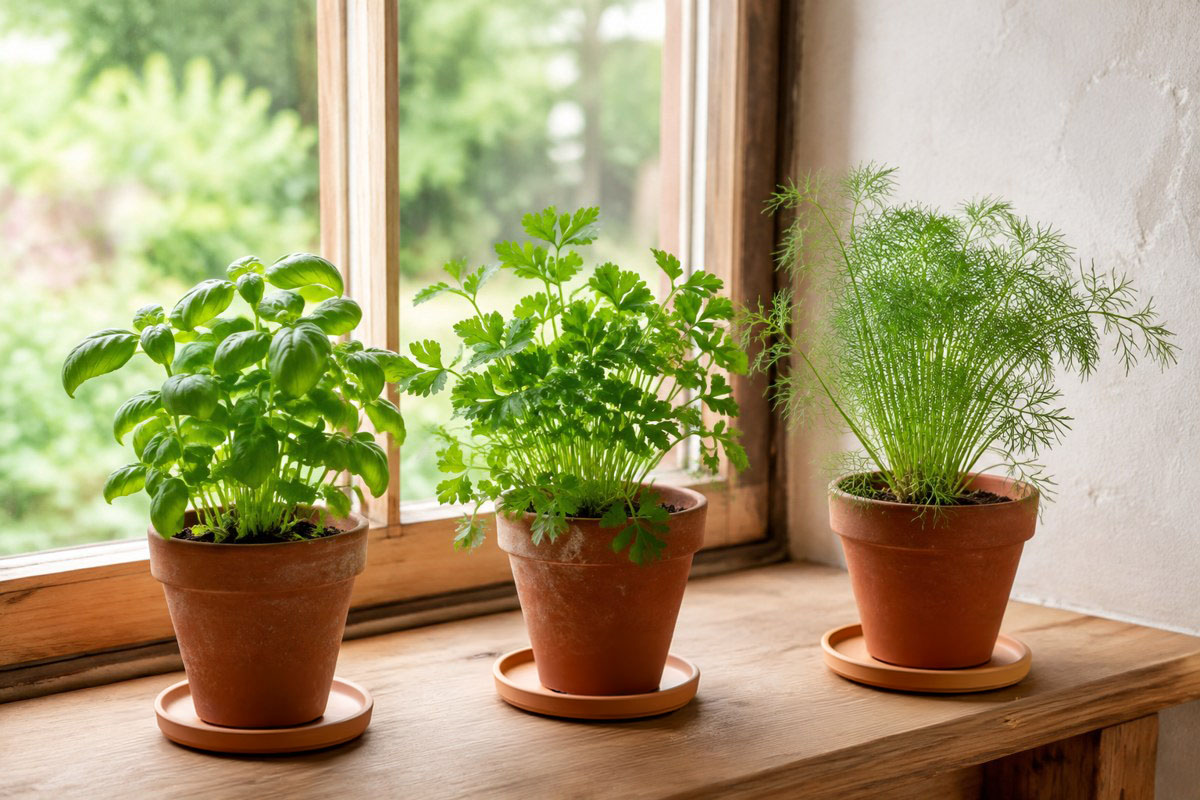
Second, for living greenery indoors that can also supply fresh leaves for your rabbit’s bowl, consider five culinary herbs named in rabbit-feeding guidance from NC State and Purdue:
- Basil
- Cilantro
- Dill
- Parsley
- Mint
They are not traditional houseplants, but they make a fragrant windowsill garden. The companion Herbs for rabbits → explains how to grow them and offer small amounts of clean, clipped leaves as part of a rabbit’s mixed greens.
How iceberg compares with other lettuce
Iceberg is not nutritionally empty. It contains fiber, vitamin C, potassium, and other micronutrients. The USDA comparison below shows that the amounts differ among lettuces—and that all three are mostly water. Water content alone is not a toxicity test.
The veterinary advice is not entirely consistent in its explanation. Veterinary Partner (VIN) advises against iceberg on nutritional grounds—not dangerous, just low in nutritional value. NC State’s “Rabbit Nutrition” page also names lactucarium and possible digestive effects, but provides no rabbit dose or supporting study for that claim. These pages do not establish a safe dose or a toxic dose, or show that a single leaf causes poisoning.
About lactucarium. Iceberg, romaine, and green leaf lettuce are all varieties of the same species—Lactuca sativa. All cultivated lettuce produces latex containing lactucarium, the compound NC State names. The plant that earned the nickname “lettuce opium” is wild lettuce (Lactuca virosa), a different species with far higher concentrations—not something found at a grocery store. NC State’s warning does not compare lactucarium levels between lettuce types or cite a study showing that iceberg contains meaningfully more of these compounds than romaine.
Weight for weight
What is in 100 grams of lettuce?
Raw lettuce, about 3½ oz. All values from the same USDA database, at the same weight, so the comparison is fair. These are food-composition values, not recommended rabbit portions.
Swipe sideways to compare every column
| Lettuce | Water | Fiber | Vitamin C | Potassium | Calcium | Vitamin A | Vitamin K |
|---|---|---|---|---|---|---|---|
| Iceberg | 95.6% | 1.2 g | 2.8 mg | 141 mg | 18 mg | 502 IU | 24 µg |
| Green leaf | 95.0% | 1.3 g | 9.2 mg | 194 mg | 36 mg | 7,400 IU | 126 µg |
| Romaine | 94.6% | 2.1 g | 4.0 mg | 247 mg | 33 mg | 8,710 IU | 102 µg |
Source: USDA FoodData Central, SR Legacy—items 169248 (iceberg), 169249 (green leaf), 169247 (romaine). Published April 1, 2019. Cultivars and samples vary.
The clearest gaps are vitamin A and vitamin K, where romaine and green leaf pull well ahead. For water, fiber, vitamin C, and potassium, the three lettuces are closer than the internet myth suggests. Notice that green leaf actually beats romaine in vitamin C. Iceberg is also the lowest of the three in calcium, at 18 mg against 33 and 36 mg, and all three sit at the low-calcium end of the greens guide’s calcium chart. These numbers don’t sort into a neat worst-to-best line. NC State’s care guide includes romaine and green leaf among its salad greens.
For routine feeding, choose those supported greens. If a piece of iceberg has already been eaten, note the amount and your rabbit’s condition when asking your vet for advice. A nutritional comparison cannot diagnose an exposure—and a rabbit who stops eating needs attention whatever the last food was.
If your rabbit has already eaten something concerning
Not knowing what your rabbit may have eaten—or exactly how much—is a frightening place to be. ASPCA Poison Control recommends calling right away, and their hotline runs around the clock—so there’s help available even in the middle of the night. You don’t need to solve the chemistry yourself or wait for your rabbit to look ill before calling.
- Prevent another bite
Move the food or plant out of reach. Keep the wrapper, ingredient list, or a clear photo of the plant.
- Gather the details
Write down what was eaten, how much may be missing, when it happened, and your rabbit’s approximate weight.
- Call for advice
Contact your vet or ASPCA Poison Control: (888) 426-4435. Follow the advice for this exposure.
Do not try home antidotes or make your rabbit vomit. Purdue’s care guide explains that rabbits cannot vomit. The University of Illinois warns that reduced eating, fewer droppings, a hunched posture, or a swollen abdomen can signal serious gut disease. Trouble breathing, collapse, or seizures need emergency veterinary care immediately.
Sources
Links checked September 6–28, 2026. These sources support the guidance; this article has not had an independent veterinary review.
- ASPCA Animal Poison Control Center, “Rabbit Pet Parents: Beware of These Common Pet Toxins!”—October 24, 2024. Rabbit-specific chocolate, avocado, and plant guidance.
- ASPCA Animal Poison Control Center, “Swiss Cheese Plant”—identifies Monstera deliciosa as containing insoluble calcium oxalates; its species toxicity labels cover dogs and cats, not rabbits. Checked September 28, 2026.
- NC State Extension Gardener Plant Toolbox, “Monstera deliciosa”—identifies monstera as an arum-family plant, not a true philodendron, and describes its calcium oxalate crystals. Botanical information, not rabbit-specific toxicity guidance. Checked September 28, 2026.
- NC State Extension Gardener Plant Toolbox, “Philodendron”—identifies philodendron as an arum-family genus. Botanical information, not rabbit-specific toxicity guidance. Checked September 28, 2026.
- ASPCA Poison Control—emergency contact and consultation information; no publication date shown.
- Merck Veterinary Manual, “Plants and Foods That Are Harmful to Rabbits”—table accompanying “Diet for Rabbits”; no separate table author or date shown. Its “Toxic—Do Not Feed” column includes sweet potato (checked September 22, 2026).
- Merck Veterinary Manual, “Diet for Rabbits”—Laurie Hess, DVM, DABVP; reviewed July 2026.
- NC State Veterinary Hospital, “Rabbit Nutrition”—food hazards and juvenile feeding; no individual author or publication date shown. Its iceberg claims are discussed with their limits above.
- NC State Veterinary Hospital, “Caring for Your Pet Rabbit”—diet, herbs, and small fruit portions; “Breads and cereals should also be avoided”; “Good treats for rabbits include a small piece of cucumber, bell pepper, sweet potato, or other vegetables”; no individual author or publication date shown; checked September 12, 2026 (treat line checked September 22, 2026).
- NC State Extension Gardener Plant Toolbox, “Ipomoea batatas”—lists Edible Sweetpotato, Ornamental Sweetpotato, and Sweet Potato Vine as common names of one species; notes that sweetpotato is “grown both for ornamental foliage and for edible roots”; no individual author or date shown; checked September 22, 2026.
- Veterinary Partner, Veterinary Information Network, “Rabbit Care: Diet and Nutrition”—Susan Brown, DVM; Logan Kopp, DVM; July 2024. “The darker green a food is, the higher the nutritional value. This is why, for instance, iceberg lettuce is not recommended. It is not dangerous but is low in nutritional content.” Checked September 12, 2026.
- MSPCA-Angell, “Cecal Dysbiosis in House Rabbits: What the Hay?”—Brendan Noonan, DVM, DABVP; no publication date shown.
- University of Wisconsin School of Veterinary Medicine, “Tiny teeth: Understanding dental health in rabbits, guinea pigs, and other small pets”—Sim Khanuja; quoting Christoph Mans, DVM, DACZM; January 15, 2026. Diet as the primary cause of dental disease in rabbits.
- University of Florida Small Animal Hospital, “How to care for your pet rabbit”—fruit flesh and food preparation; no individual author or publication date shown.
- Purdue University College of Veterinary Medicine, “Care of Rabbits”—herb list and vomiting note; no individual author shown; checked September 12, 2026.
- USDA FoodData Central, SR Legacy—items 169248 (iceberg), 169249 (green leaf), 169247 (romaine). Published April 1, 2019. Lettuce nutrient values used in the comparison table above, including calcium (field “Calcium, Ca”: iceberg 18 mg, green leaf 36 mg, romaine 33 mg per 100 g; checked September 22, 2026).
- University of Illinois College of Veterinary Medicine, “Rabbit Gastrointestinal Stasis Syndrome”—Michelle C. Borsdorf, DVM, DACZM; June 4, 2024.
Found this helpful? The kindest thing you can do is leave a tip or share it with another rabbit person—every guide here stays free, always.
Get rabbit care tips
Join the Hutch list—I write when there’s something worth hopping over for, not every other Tuesday.